

A wall outlet is part of the background of daily life. Parents use it to charge a phone, run a lamp, or warm a child’s room. Yet a faulty connection behind that plain plastic cover can make heat, start a fire, or expose a child to electric current. An outlet may seem normal until a plug scorches or a child touches damaged metal. Families in Boston, Massachusetts, and the surrounding New England states should know both the medical risks and the legal options that may exist when a child suffers harm.
This guide explains how outlet and wiring faults cause burns, what fire data and safety codes tell us, how hazards arise in careful homes, and what parents can do next. When a child suffers an electrical burn or a fire injury, a personal injury attorney can review the facts and assess whether a claim for medical bills, hospital costs, or other losses may be available depending on the circumstances.
How Faulty Outlets and Wiring Can Burn a Child
Electricity flows through a circuit from a power source, through an appliance, and back again. A firm connection lets current pass as the system was designed to do. A loose wire, worn outlet contact, damaged cord, or poor splice may resist that flow. The point of resistance can heat up, even when the lamp or charger still works. A gap in a connection can also let current jump through air, a process called arcing. An arc may reach a high temperature and ignite nearby material.
A child may be hurt in more than one way. Touching a live part can send current through the body and leave an electrical burn at the contact point. The path of that current can injure tissue beneath skin that shows little damage. A child can also touch a hot plug or outlet face, or suffer flame burns and smoke exposure after a fire starts in a wall or room. These events require different medical care, but each can lead to serious harm.
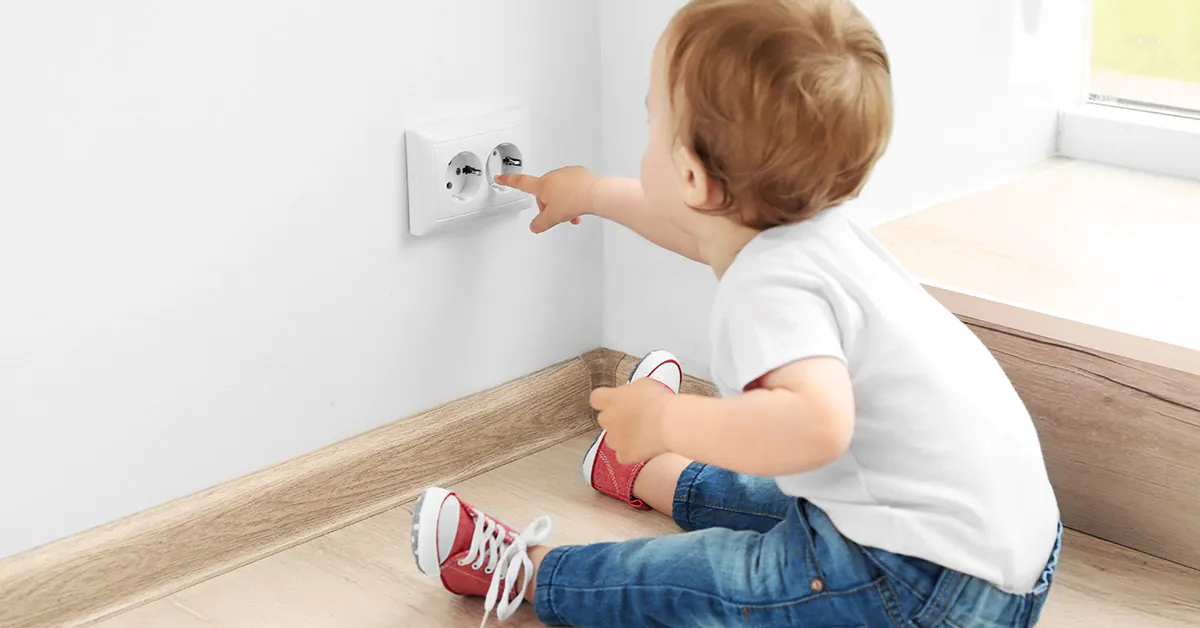
Young children explore through touch and often lack the judgment to avoid a damaged outlet. Their hands are small, and they may place metal objects in unprotected slots. The American Academy of Pediatrics warns that toddlers can suffer shock when they put objects into outlets or bite cords. Children who cannot explain pain or dizziness may also struggle to report symptoms after contact. An electrical injury deserves prompt medical review, even if the skin mark seems small.
What the Numbers Show About Electrical Fires
The National Fire Protection Association reported in May 2026 that U.S. fire departments responded to an estimated average of 46,652 home electrical structure fires each year from 2020 through 2024. NFPA estimated that these fires caused 527 civilian deaths and 1,580 civilian injuries per year. These figures cover a broad group of electrical fires; they do not count only outlet defects, child burns, or homes with negligent wiring. That distinction matters when families read national data and try to understand one injury.
NFPA also found that electrical distribution, lighting, or power transfer equipment was involved in ignition in a large share of these fires. Its report notes that arcing from operating equipment was a major heat source. The numbers show why a hot outlet, a repeated breaker trip, or a smell of burning plastic should not be dismissed as a small nuisance. They do not prove what caused a specific fire. A qualified investigation may need to trace where it started and what failed.
The U.S. Consumer Product Safety Commission has long warned that loose plugs and unusually warm receptacles can signal a fire hazard. Its home electrical safety checklist also explains that children can suffer serious shock and burns when they insert objects into outlets. Parents do not need a national child injury count to act on these warnings. They do need accurate facts about the hazard in their own home, including when it appeared and who knew about it.
What Electrical Safety Rules Require, and Their Limits
In Massachusetts, the electrical code is 527 CMR 12.00. The Massachusetts Department of Fire Services states that the current code, effective April 24, 2026, is based on the 2026 edition of NFPA 70, the National Electrical Code, with state amendments. Electrical code rules address matters such as the installation of receptacles, wiring methods, grounding, and protective devices. Whether a specific rule applies to a home may depend on when work was done, what work was done, and how local officials apply the code.
Two common types of protection serve different purposes. A ground fault circuit interrupter, or GFCI, cuts power when it detects a dangerous imbalance in current and can reduce shock risk in locations such as bathrooms and other wet areas. An arc fault circuit interrupter, or AFCI, can cut power when it detects certain arc faults that may start a fire. Tamper resistant receptacles use internal shutters designed to help prevent a child from inserting an object into one slot. None of these devices makes every outlet safe or replaces sound wiring.
The CPSC also regulates certain consumer electrical products. For example, it has identified safety requirements for extension cords and urged consumers to check recalls. A recalled power strip may create a hazard even when the wiring in the wall is sound. In December 2025, CPSC announced a recall of certain ANNQUAN power strips because they lacked supplementary overcurrent protection and could pose a fire risk if overloaded. This recall does not mean that all power strips, or all wall outlets, share that fault.
Code compliance is an important question, but it does not settle every case. A device may meet a standard yet fail because of a manufacturing defect. An installer may use the right device but leave a connection loose. A landlord may receive a report of heat or sparking and fail to address it. Investigators must examine the actual product, electrical work, history, and applicable rules rather than assume that a code label answers every question.
How an Outlet Injury Can Happen in a Careful Home
A family may have no reason to think a bedroom outlet is unsafe. The cover looks clean, the lamp turns on, and no wire is visible. Behind the faceplate, however, a terminal may have come loose or a contact may have worn with use. Heat can build over time. Furniture may hide the first stain on the wall, and a parent may notice the problem only after smelling smoke. This is one reason a working outlet is not the same as a proven safe outlet.
Some incidents start with a plug that no longer fits firmly. Others involve a receptacle that feels hot, a crack in the face, a failed extension cord, or moisture from a leak. A portable heater or another high demand appliance can add stress to a bad connection. In a rental home, a tenant may have reported the fault and assumed that a repair was underway. In a newer home, an error made during installation may remain hidden until the outlet sees routine use.
An injury does not mean a parent failed to watch a child. Parents cannot see inside a wall, test every connection, or know whether a product left the factory with a defect. The American Academy of Pediatrics urges outlet protection and cord safety, but it does not suggest that supervision alone can prevent every electrical injury. The key questions after a serious event include what failed, what warning signs existed, who controlled the hazard, and what steps that person or company could have taken.
NFPA also found that electrical distribution, lighting, or power transfer equipment was involved in ignition in a large share of these fires.
Warning Signs, Emergency Care, and Evidence to Keep
Some danger signs call for action before an injury occurs. The CPSC advises families to stop using a hot outlet and seek help from a qualified electrician. If a child has already touched a live source, do not touch the child while contact with electricity may continue. Turn off power if it is safe to do so, and call 911 for an active electrical emergency, fire, trouble breathing, loss of consciousness, or other urgent symptoms. Never enter a smoke filled room or reach toward live equipment to collect evidence.
- A burning smell, scorch marks, melted plastic, smoke, or a hot outlet or plug.
- Buzzing, crackling, repeated sparking, a loose plug, or a breaker that trips again and again.
- A broken faceplate, exposed metal, water near electrical parts, or damage after a leak or flood.
- After contact: burns, pain, numbness, weakness, confusion, fainting, chest symptoms, or trouble breathing.
- After a fire: cough, hoarse voice, soot around the mouth or nose, headache, dizziness, or breathing problems.
The American Academy of Pediatrics advises immediate medical attention for any electrical burn. Such injuries can be deeper than they look. A doctor may need to assess the heart, nerves, muscles, and skin based on the nature of the contact. Children exposed to a fire may also need care for smoke inhalation. Follow emergency guidance first. Do not put ice on a burn, and do not treat an electrical injury as harmless because the mark is small.
Once everyone is safe, preserve what may explain the event. Take photographs of the outlet, room, plug, and damage if you can do so without risk. Keep the product, packaging, receipts, instructions, and any written repair requests. Do not plug the item back in, alter damaged wiring, or throw away parts before an appropriate inspection. Ask that removed parts be kept if emergency repairs are required. Save medical records, discharge papers, photographs of injuries, and a timeline of symptoms. An insurer or investigator may seek access to the scene, so legal advice can help families avoid losing evidence.
Practical Ways to Reduce Risk at Home and Elsewhere
Parents can begin with a slow walk through each room. Look for loose faceplates, damaged cords, plugs that fall out, and stains near receptacles. Notice heat, noise, or odors during normal use, but do not touch a suspect outlet to test it. Stop using a suspect device and ask a licensed electrician to assess the circuit. A tripping breaker should not be reset without end while the cause stays unknown. The CPSC warns against replacing a breaker with one of a higher rating to make trips stop.
Have an electrician review outlets near water, older two prong receptacles, and areas where children play. Ask whether the current installation needs GFCI protection, AFCI protection, tamper resistant receptacles, or another repair under the rules that apply. Keep cords out of children’s reach and avoid treating an extension cord as permanent home wiring. Test smoke alarms, plan two ways out of each room when possible, and practice a fire escape plan with children at a level they can understand.
Safety checks should extend beyond the family home. A child may stay with a grandparent, babysitter, or caregiver, spend time in a rental property, or visit a vacation home with older wiring. Parents can ask whether outlets are secure and whether past electrical trouble has been repaired. Before buying or continuing to use a power strip, extension cord, or other device, check the CPSC recall database at cpsc.gov/Recalls. Follow a recall notice for the exact model involved, rather than assuming that a similar looking product is affected.
Families who rent should report signs of electrical trouble in writing and keep a copy. Massachusetts housing rules, including the State Sanitary Code at 105 CMR 410, address basic electrical supply and safe housing conditions. A landlord should receive a clear description of any heat, sparking, exposed wiring, or failed outlet. If a hazard poses an immediate threat, seek emergency help and do not wait for a routine maintenance visit. A building inspector or other local authority may also be able to address unsafe conditions.
Legal Options After a Child Suffers an Outlet or Wiring Injury
A serious injury may raise several legal theories, but no single theory fits every event. A product liability claim may arise if a receptacle, power strip, or related component had a design defect, a manufacturing defect, or inadequate safety warnings that contributed to the injury. The investigation may involve the device’s model, recall status, design, testing, instructions, and condition after the event. A recall can provide useful facts, but a recall by itself does not prove that a product caused a particular child’s harm.
Negligence may be at issue when a contractor or electrician performed unsafe work or failed to use reasonable care. Premises liability may matter if a property owner knew, or should have known, of a dangerous condition and did not take reasonable steps under the circumstances. In a rental property, landlord liability may be examined when the owner had a duty to maintain or repair an unsafe electrical condition. The law may treat owners, installers, sellers, and makers in different ways, so an attorney must examine each party’s role.
Medical records can show the nature of a burn, whether surgery or therapy was required, and what care the child may need in the future. Fire reports, electrical inspections, photographs, service records, and witness accounts can help determine cause. Where a valid claim exists, compensation for medical expenses, pain, scarring, or other proven losses may be available depending on the circumstances. The severity of an injury does not by itself establish that another party is legally responsible.
Time matters. Massachusetts and each of the surrounding New England states have their own statutes of limitations and related rules that can affect when a claim must be brought. A child’s age, the type of defendant, and other facts may change the analysis. Families should not assume that a deadline will wait until a child grows older. A prompt case review may help preserve the device, identify parties, and assess the laws that apply before evidence disappears.
Talk to a Child Injury Lawyer About Your Family’s Case
Outlet and wiring cases may require product testing, expert testimony from electrical and fire specialists, medical records review, and analysis of safety regulations. Investigators may need to separate an installation error from a defect in a component or an unsafe condition that went unrepaired. Most families cannot carry out that work on their own while helping a child recover from burns, surgery, or smoke exposure. A careful review can identify what evidence exists and whether any legal claim may be supported.
At Swartz & Swartz, P.C., our Boston child injury lawyers can review your case, answer your questions, and offer aggressive representation should you decide to work with us. If your child was burned or otherwise injured by a faulty outlet, unsafe wiring, or an electrical fire in Boston, Massachusetts, or the surrounding New England areas, learn more by contacting us online today or calling us at (617) 742-1900 to set up your free case review.
Need Help?
If you or someone you know, needs help from a lawyer, contact the law offices of Swartz & Swartz, use our live chat, or send us a message using the form below and we’ll get in touch to assess your case and how we can help.
About the Author: James Swartz

Keep Reading
Want more? Here are some other blog posts you might be interested in.

A wall outlet is part of the background of daily life. Parents use it to charge a phone, run a

When a Child Is Hit by a Car and Needs Surgery: What Compensation Can Parents Seek in Massachusetts?
Child pedestrian injuries can require emergency surgery, hospitalization, and months of recovery. When a child is struck by a car

An airbag failure lawsuit in Massachusetts may become necessary when a defective vehicle safety system contributes to serious injuries. Drivers