

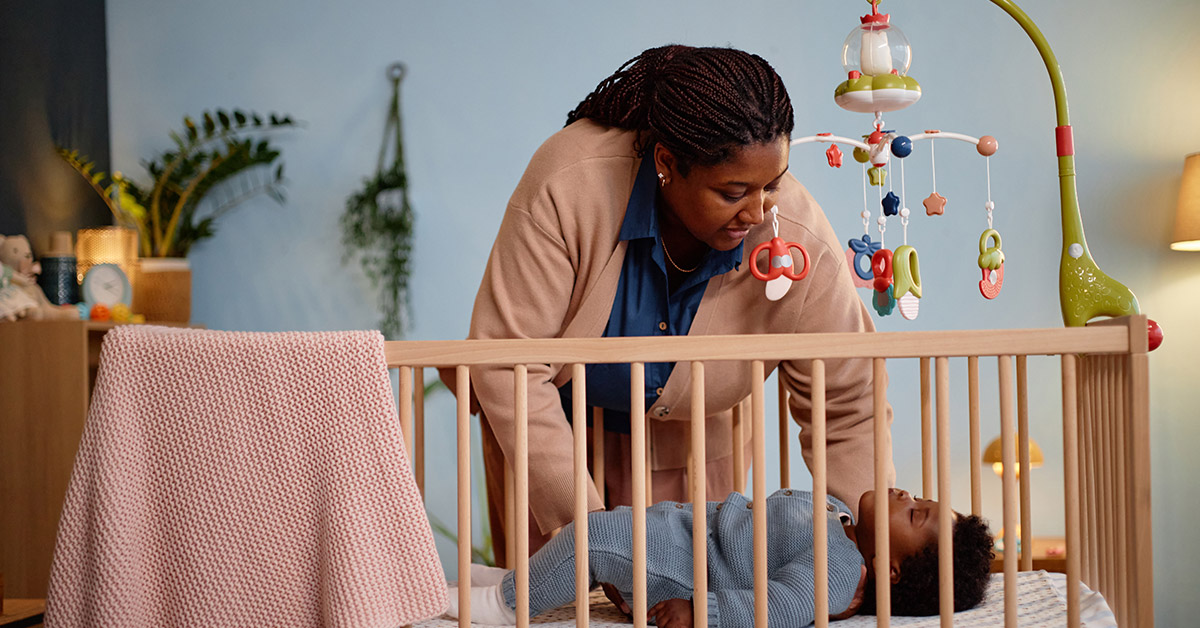
Parents shopping for a new crib or bassinet often assume that anything on the shelf at a major retailer must be safe. Federal law bans the most dangerous infant sleep products, the Consumer Product Safety Commission enforces mandatory standards, and reputable brands promote their compliance with pride. Yet infant sleep-related deaths remain one of the leading causes of pediatric mortality in the United States, and many of those deaths involve products that were legally sold, appeared to meet current standards, and were used by families who were doing everything they thought they were supposed to do. The gap between what is legal and what is truly safe has narrowed over the past several years, but it has not closed. Families in Boston, throughout Massachusetts, and across the surrounding New England states should understand both the medical reality of crib and bassinet dangers and the legal options available when an infant is harmed by a defective sleep product.
This overview walks through what current federal law now requires, what infant sleep hazards remain despite the rules, how injuries and deaths happen even in careful nurseries, and what families can do when a product fails. If your infant has been injured or died in a crib or bassinet incident, a personal injury attorney can review the facts of your case and help you understand whether you may have grounds to seek compensation for medical bills, funeral costs, and related losses.
The Scope of the Problem in Numbers
The Centers for Disease Control and Prevention reports that in 2020, roughly 900 infants died from accidental suffocation or strangulation in bed, and approximately 1,400 additional infants died from Sudden Infant Death Syndrome. Together, sleep-related deaths remain one of the leading causes of mortality in babies under one year old. The CDC and the American Academy of Pediatrics group these deaths under the broader category of Sudden Unexpected Infant Death, which includes SIDS, accidental suffocation, and other unexplained deaths in infants under one.
The pattern behind many of these deaths reveals unsafe sleep environments: soft bedding, inclined surfaces, shared sleeping arrangements, and products that were later recalled. The Fisher-Price Rock ‘n Play Sleeper, recalled in 2019, was linked to dozens of infant deaths before it was pulled from the market. Millions of units had already reached American homes. Similar recalls followed with the Kids II rocking sleeper, Graco inclined sleepers, and other products that shared the same fundamental design flaw. The scale of the harm eventually pushed Congress to act.
What the Safe Sleep for Babies Act Now Bans
The Safe Sleep for Babies Act, signed into federal law on May 16, 2022, and effective November 12, 2022, banned two categories of infant sleep products that had been linked to hundreds of infant deaths. The law made it unlawful to manufacture, sell, distribute, or import inclined sleepers for infants or crib bumpers into the United States, regardless of when the product was originally manufactured.
The CPSC codified the ban in two final rules that took effect on September 15, 2023. Under 16 CFR 1310, an inclined sleeper for infants is defined as any product with a sleeping surface angled more than ten degrees, intended for infants up to one year old. Under 16 CFR 1309, a crib bumper is defined as any padded material intended to cover the sides of a crib to prevent injury or restrict access to openings, including padded crib bumpers, supported and unsupported vinyl bumper guards, and vertical crib slat covers. The rule specifically does not include non-padded mesh crib liners.
These bans followed a two-year congressional investigation that found deficient safety reviews, aggressive marketing practices, and gaps in the consumer product safety system had allowed dangerous products to remain on the market for years after warning signs emerged. The ban is now one of the strongest infant product safety laws in American history. However, several categories of hazards remain, and enforcement gaps continue to allow non-compliant products into American homes.
The Hazards That Remain Despite Federal Action
The Safe Sleep for Babies Act addressed two specific categories of products, but it did not address every hazard associated with infant sleep environments. Several risks continue to appear in pediatric case reports and CPSC investigations.
Products sold through third-party online marketplaces frequently fail to meet current federal standards. Amazon, TikTok Shop, AliExpress, Shein, Temu, and similar platforms sometimes list inclined sleepers, crib bumpers, and other banned products that are shipped directly from overseas sellers. The CPSC has issued multiple warnings about these products, but enforcement is uneven, and products reach parents’ hands before regulators can act. In 2024 and 2025, CPSC recall notices continued to identify bassinets and infant sleep products sold through these channels that failed to meet U.S. safety standards, including recent recalls of products sold on AliExpress.
Older products in circulation remain a significant hazard. A bassinet or crib that was purchased before the Safe Sleep for Babies Act took effect, or before the CPSC’s updated infant sleep product rule that took effect in June 2022, may not meet current standards. These products often move through garage sales, thrift stores, hand-me-downs from older siblings, and family transfers. The federal ban applies to new sales, but it does not remove products already sitting in homes, nurseries, and daycare facilities.
Recalled products continue to cause deaths years after the recall notice. Manufacturer notifications frequently fail to reach the original purchaser, particularly when a product was received as a gift, bought secondhand, or purchased online through a third-party seller. The CPSC estimates that a substantial share of recalled infant products remain in use because families never received notice of the recall or never registered the product.
Mattress and sleep surface hazards persist even in products that meet current standards. A bassinet mattress that does not fit snugly can create gaps where an infant’s head can become wedged. A crib mattress that is too soft can conform to an infant’s face and interfere with breathing. Aftermarket mattress pads, mattress toppers, and sheepskin liners can transform a compliant sleep surface into a hazardous one. Federal rules govern the sleep product itself, not everything a well-intentioned parent might add to it.
The Centers for Disease Control and Prevention reports that in 2020, roughly 900 infants died from accidental suffocation or strangulation in bed, and approximately 1,400 additional infants died from Sudden Infant Death Syndrome
How Infant Sleep Deaths Happen in Careful Nurseries
Several patterns show up repeatedly in pediatric fatality reports. All of the circumstances can occur even with diligent parental care.
Rolling incidents cause many of the deaths that occur in bassinets. A newborn placed on their back can roll onto their stomach as they gain neck and shoulder strength, typically between two and four months old. In a bassinet with padded sides or a soft mattress, that roll can trap the infant’s face against a surface that interferes with breathing. Manufacturers now provide age and developmental milestone recommendations for when to transition an infant out of a bassinet, but those milestones can be reached before parents recognize them.
Bedding-related deaths remain common. A blanket, pillow, positioner, lounger, or stuffed animal placed in a crib or bassinet with an infant can cause suffocation if the child’s face becomes pressed against it. Sleep sacks and swaddles, when used properly and discontinued at the appropriate developmental stage, are safer alternatives. But the same swaddle that keeps an infant safe at two weeks can become a hazard at three months if the infant begins to roll. The transition point is not obvious to every parent, particularly first-time parents relying on advice from family members whose safe sleep guidance is decades out of date.
Falls happen when a bassinet is placed on an unstable surface, when wheels are not locked, or when a caregiver places a bassinet on a bed, a couch, or an elevated surface temporarily. Some bassinets have collapsed under a child’s weight due to defective folding mechanisms or frame welds that failed under normal use. These failures have generated CPSC recalls, but as noted, recalled products often remain in use.
Second-location incidents are a recurring theme. An infant placed in a bassinet at a grandparent’s home, an aunt or uncle’s house, a babysitter’s home, or a hotel room during travel may sleep in a product that predates the current federal ban. Vacation rentals and short-term rentals sometimes provide older cribs and pack-and-play units of unknown compliance status. Massachusetts family childcare programs are subject to state licensing regulations that require compliant infant sleep environments, but enforcement in home-based care settings is uneven.
Warning Signs and Steps to Take After a Sleep Product Incident
Any incident involving an infant in a crib, bassinet, or other sleep product should prompt an immediate medical response. Infants show distress differently than older children, and by the time a parent notices something is wrong, the situation may already be an emergency. Signs that require calling 911 immediately include:
- The infant is unresponsive, limp, or not breathing normally
- The infant’s face is pressed against a surface and cannot be freed easily
- Bluish color to the lips, face, or fingertips
- The infant makes weak or irregular attempts to breathe
- Any suspected entanglement in bedding, straps, or product components
- Any fall from a crib, bassinet, or elevated sleep surface
- Bruising, swelling, or visible injury after the infant is removed from the product
If a sleep product was involved in the incident, preserve it in the condition it was in at the time. Do not adjust the mattress, remove bedding, tighten a strap, or fold the bassinet. Take photographs of the entire product, focus on any mechanism that failed, and photograph the surrounding room from multiple angles. Save the packaging, manual, warranty card, receipts, and any warning labels. These items often become central evidence later if you decide to pursue a claim. Check the CPSC recall database at CPSC.gov to determine whether the specific product has been recalled, and preserve any recall notice you received.
Practical Steps Families Can Take to Reduce the Risk
Check the CPSC recall database before purchasing any crib, bassinet, or infant sleep product, and especially before accepting a hand-me-down or buying secondhand. Older products that predate the June 2022 infant sleep product rule or the November 2022 Safe Sleep for Babies Act may not meet current standards, even if they look nearly new. Do not use inclined sleepers or crib bumpers under any circumstances. Both are federally banned, and any product being offered for sale, resale, or donation with those features is unlawful to distribute.
Follow the American Academy of Pediatrics safe sleep guidance every time. Place infants on their back, on a firm and flat surface, with a fitted sheet and nothing else in the sleep environment. No blankets, pillows, positioners, loungers, bumpers, stuffed animals, or aftermarket accessories. Keep the sleep space in the parents’ room for at least the first six months and ideally the first year, but on a separate sleep surface. Do not use inclined seats, swings, car seats, or loungers as sleep locations for extended periods.
Inspect the crib or bassinet regularly. Check that the mattress fits snugly with no gaps around the edges, that all hardware is tight, that the frame is stable, and that any wheels lock securely. Test the bassinet for stability by pressing firmly on the edges to confirm it does not tip. Read the manufacturer’s weight and developmental milestone limits and transition the infant out of the bassinet as soon as any limit is reached, particularly when the infant begins to roll, push up, or sit.
Have a direct conversation with grandparents, babysitters, daycare providers, and any household where the infant will sleep. Many caregivers rely on infant sleep advice that is decades out of date and predates the current safe sleep consensus. A short factual explanation of the current AAP guidelines and the Safe Sleep for Babies Act often prompts a same-day update to the sleep environment.
Legal Options When an Infant Is Injured or Dies in a Sleep Product
When an infant is injured or dies in a crib, bassinet, or other sleep product, families face medical, emotional, and financial consequences that are difficult to describe. Depending on the circumstances, compensation may be available through several legal paths.
Product liability is often the most direct path when a defective sleep product caused the injury or death. Manufacturers, importers, and retailers can be held responsible for design defects, manufacturing defects, or inadequate warnings. Design defect arguments in infant sleep cases can be particularly strong when the product violated the Safe Sleep for Babies Act, incorporated a banned feature such as an inclined surface or padded bumper, or was subject to a prior recall that the manufacturer knew about. Failure-to-warn claims focus on whether the manufacturer adequately communicated known risks to consumers, including risks that emerged after the product was on the market.
Wrongful death claims may be pursued when an infant dies as a result of a defective product or a caregiver’s negligence. Massachusetts recognizes wrongful death actions under M.G.L. c. 229, and the surrounding New England states have similar statutes with their own procedural rules. These are complex cases that require detailed investigation, medical review, and often expert testimony on infant physiology and product engineering.
Negligence claims may also apply against a daycare facility, family child care provider, hotel, vacation rental host, or other party who provided a non-compliant sleep environment. Retailers and marketplace platforms that continued to sell banned products after the November 2022 effective date may face liability under state consumer protection laws in addition to federal law. Each case turns on the specific facts, including the age of the infant, the specific product involved, where it was purchased, whether it complied with current federal standards, and what warnings were present.
Massachusetts and each of the surrounding New England states have their own statutes of limitations governing personal injury, product liability, and wrongful death claims. Some of these deadlines are shorter than parents expect. Preserving the product, its packaging, and any medical documentation is critical, and consulting a legal professional early helps protect options that might otherwise be foreclosed.
Talk to a Child Injury Lawyer About Your Family’s Case
Infant sleep product cases can be technically complex and deeply personal. They often involve product testing, engineering analysis of the failure mechanism, expert testimony on infant physiology, review of the applicable federal safety standards, and detailed medical records. Most families are not in a position to investigate that on their own while also processing the aftermath of a serious injury or a loss.
At Swartz & Swartz, P.C., our Boston child injury lawyers can review your case, answer your questions, and offer aggressive representation should you decide to work with us. If your infant was injured or died in a crib, bassinet, or other sleep product incident in Boston, Massachusetts, or the surrounding New England areas, learn more by contacting us online today or calling us at (617) 742-1900 to set up your free case review.
Need Help?
If you or someone you know, needs help from a lawyer, contact the law offices of Swartz & Swartz, use our live chat, or send us a message using the form below and we’ll get in touch to assess your case and how we can help.
About the Author: James Swartz

Keep Reading
Want more? Here are some other blog posts you might be interested in.


Emotional distress after a car accident in Massachusetts can be just as disruptive as a physical injury, yet it is

A family gathering can feel like the safest place for a child to meet a friendly dog. The dog may

A concussion claim in Massachusetts may arise when someone suffers a head injury in a car accident caused by another