

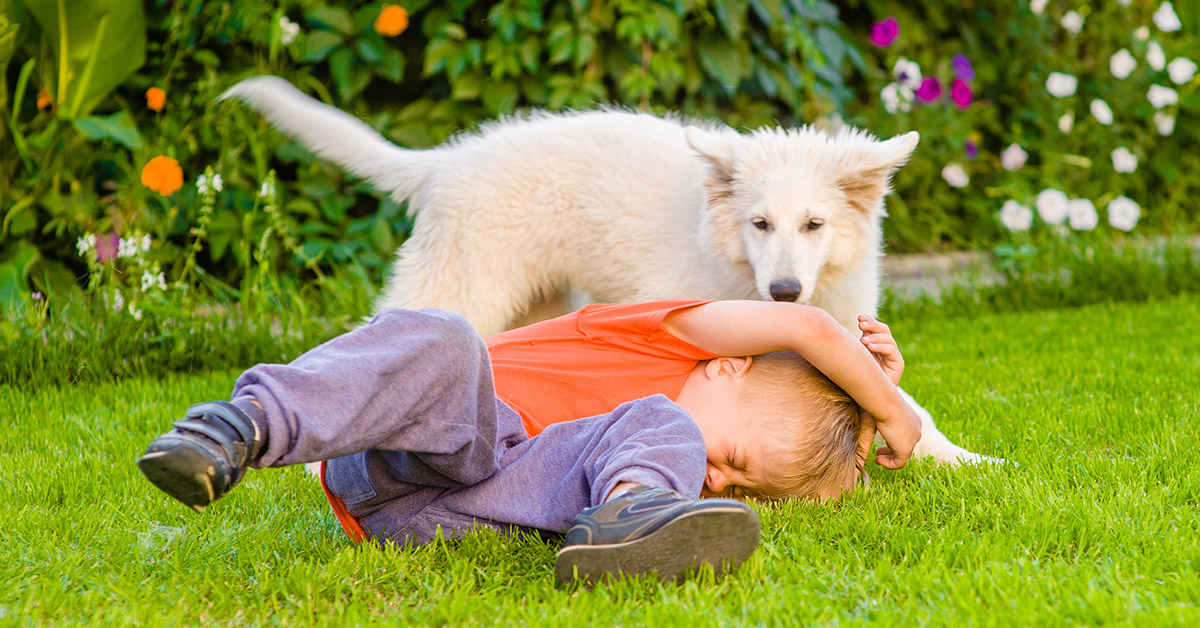
A family gathering can feel like the safest place for a child to meet a friendly dog. The dog may have greeted guests for years without a problem, yet one sudden bite can leave a child with deep wounds, fear, and a long course of care. Parents who face that shock in Boston, Massachusetts, and the surrounding New England states should understand both the medical risks and the legal options that may follow when a child is hurt.
This article explains why bites can cause serious injuries, what safety guidance says, how a party can become unsafe, and what families can do next. It also explains why the dog owner and the person hosting the party are not always the same legal defendant. A personal injury attorney can review the facts and help a family assess whether it may have grounds to seek compensation for medical bills, hospital costs, and related losses.
Why a Familiar Dog Can Cause Serious Injuries to a Child
A dog does not need a record of aggression to bite. Loud voices, food, toys, a crowd in a narrow hall, or a child who reaches for a resting dog can create stress. Dogs often signal distress by turning away, freezing, stiffening, licking their lips, or moving to escape. A child may miss those signals, and an adult may mistake stillness for patience. The American Veterinary Medical Association warns that even a familiar family dog can react when frightened, hurt, or overwhelmed.
Children face risks that adults do not. A small child stands near a dog’s mouth and may fall during an encounter. Thin skin and smaller facial structures make injuries to the lips, cheeks, nose, and eyes a concern. A bite can tear tissue, damage a nerve, or leave a scar after the skin heals. Deep wounds can also become infected. A doctor may need to examine the wound for damage that is not clear from the surface and decide whether surgery or follow up care is needed.
The harm may reach beyond the wound. A child who once loved dogs may have trouble sleeping, avoid social events, or fear an animal that looks like the one involved. Parents may need to attend medical visits, arrange childcare, and help a child cope with that fear. These effects deserve care and documentation, though no single reaction proves that a legal claim will succeed. The question is what happened, what harm followed, and which person had a duty to prevent a foreseeable risk.
How Common Are Dog Bites, and Why Do Parties Matter?
In an April 2026 public safety release, the American Veterinary Medical Association estimated that more than 4.5 million people in the United States are bitten by dogs each year. The association stated that children account for at least half of those injuries and that young children face a greater risk of severe head and neck wounds. Those figures describe the broad national problem, not the number of bites at parties or the number that result in a lawsuit. They still show why adults should take even a trusted dog seriously.
A birthday party or cookout places a dog in a setting that can change by the minute. Guests come and go. Food drops to the floor. Several children may want to pet the dog at once. An owner who watches closely at the start of the afternoon may become distracted while greeting friends. None of those details means a parent was careless. They mean a familiar animal can face unfamiliar demands while adults focus on other tasks.
The absence of an earlier bite offers no guarantee. Risk turns on what the dog did, what the people present observed, and whether someone had a fair chance to prevent the incident. A short video, the words of another guest, or a message about how the dog behaved before the party may be more useful than a general label such as “good with kids.” Each incident needs its own review.
What Massachusetts Law Says About the Dog Owner and the Party Host
Massachusetts General Laws chapter 140, section 155 provides a key starting point. It makes a dog’s owner or keeper responsible for damage caused by the dog, subject to stated exceptions involving trespass, another tort, or teasing, tormenting, or abusing the dog. This is often called a strict liability rule because a claimant need not establish that the owner knew the dog had bitten before. A friendly history does not, by itself, defeat a claim under the statute. Whether an exception applies depends on the evidence.
The law also gives a child under seven an added protection. In a claim brought for that child, the statute presumes the child was not trespassing, committing another tort, or teasing, tormenting, or abusing the dog. The defendant bears the burden of proving otherwise. That rule does not mean every injury produces compensation, but it matters when someone argues that a young child caused the bite by touching or approaching the animal.
The word “keeper” matters when the dog belongs to a guest. A host does not become the dog’s keeper merely because the host allowed the animal into the house. The facts may look different if a person assumed meaningful custody, care, or control over the dog. Massachusetts case law has long rejected the idea that simple permission to keep a dog on someone else’s property automatically makes the property owner its keeper. Ownership of the house and control of the animal are separate questions.
A host may still face a separate negligence claim. In Nutt v. Florio, a Massachusetts Appeals Court decision involving a child bitten by a tenant’s dog, the court held that evidence concerning a landlord’s knowledge of a danger and ability to take reasonable action presented factual questions that required further review. It did not make every landlord or host responsible for every bite. For a private party, a court would examine the host’s own conduct, knowledge, control of the setting, and the foreseeability of harm. A host who has no warning and no control over a guest’s dog stands in a different position from one who ignores repeated concerns.
How a Bite Can Happen Even at a Well Planned Gathering
Imagine that a friend brings a dog to a family party. The owner tells everyone that the dog loves children. At first, the animal walks through the room without trouble. Later, children gather near a bowl of snacks as the dog tries to rest under a chair. One child bends down to hug it, and the dog bites. The family may feel surprised and upset, but that scene alone does not tell us who may bear responsibility. The owner’s role, the host’s warnings, and any steps taken to give the dog space all matter.
Consider a second situation. Before the party, a host receives a message that the dog snapped at a child at a prior gathering. The host invites the dog anyway, leaves a door open to the playroom, and dismisses a guest who asks that it be separated. A claim against the host may raise different issues because the host had notice of a possible risk and some control over the property. By contrast, if the host asked the owner to keep the dog in a closed room and the owner let it out, the proof may point in another direction.
Bites may also occur when a guest holds a leash, feeds the animal, opens a gate, or volunteers to watch the dog. Those acts deserve attention because the law may ask who took control of the animal at the time. A child running, laughing, or reaching toward a pet does not by itself establish the statutory defense of teasing or abuse. Counsel should review the precise conduct rather than draw conclusions from a few words in a witness account.
The best record starts with calm, specific facts. Who brought the dog? Who held its leash? Did anyone warn that it disliked children, food sharing, or sudden touch? Did the dog growl or try to withdraw? Did an adult move it to another room? The answers may show a preventable danger, or they may show an event no one could foresee. Either way, families benefit when witnesses record what they saw rather than assign blame while emotions are high.
In an April 2026 public safety release, the American Veterinary Medical Association estimated that more than 4.5 million people in the United States are bitten by dogs each year.
Warning Signs, Medical Care, and Evidence to Preserve
After a bite, treat the child’s health as the first priority. The Centers for Disease Control and Prevention advises washing a wound with soap and water and seeking medical advice for serious or deep wounds, possible infection, or uncertain rabies vaccination status. A clinician may assess bleeding, tissue injury, infection, tetanus protection, and the need for rabies prevention. A wound near an eye or on the face deserves prompt attention because even a small opening may hide deeper harm.
Seek urgent care or emergency help when a child has any of these signs:
- Bleeding that does not stop with firm pressure, or a deep or gaping wound.
- An injury to the eye, face, neck, hand, or an area with loss of feeling or movement.
- Severe pain, weakness, or trouble moving a finger, arm, or leg.
- Spreading redness, swelling, pus, fever, or worsening pain after the bite.
- An unknown dog, uncertain rabies vaccination status, or an animal acting ill or strangely.
Ask the dog owner for contact details and vaccination records, and report the incident to local animal control or police as appropriate. Massachusetts public health guidance describes a ten day confinement process for an identified dog that bites a person, with local officials involved in the response. Families should not make rabies decisions on their own. A treating clinician and public health authorities can advise on the need for further care.
Preserve evidence while memories remain fresh. Take dated photographs of the wounds and the site, save clothing and any damaged items, and keep medical records, receipts, discharge papers, and follow up instructions. Request copies of messages about the dog, witness contact information, and any lawful photos or videos. If a gate, leash, crate, or other product failed, keep the actual product, packaging, receipts, and instructions in its present state rather than repairing or discarding it. These details can help experts evaluate what happened and what caused the injury.
Ways Families and Hosts Can Reduce the Risk
The safest plan starts before guests arrive. Ask whether a dog will attend, who will care for it, and whether the animal has a quiet place away from children and food. Do not rely on a promise that it has always been friendly. The American Veterinary Medical Association advises active supervision of children with dogs, even when the animal belongs to the family. If no adult can watch the interaction, separate the dog and children with a closed door or another secure arrangement.
Teach children to ask an owner before approaching and to give dogs room when they eat, sleep, guard a toy, or walk away. Adults should model a calm greeting and stop play when a dog stiffens or tries to retreat. At a large gathering, a dog may do better in a separate space for the full event. A tired or anxious dog gains nothing from being expected to entertain visitors. Hosts can make that choice without treating the animal or its owner as a problem.
If a family uses a pet gate, choose equipment designed for its task, install it as directed, and check for a secure fit. The Consumer Product Safety Commission has recalled certain gates sold as baby or dog gates, including a March 2025 recall of HabiLife retractable gates over a child entrapment hazard. That recall did not concern dog bites, but it shows why families should not assume a barrier is safe merely because it is sold for homes with pets. Search the CPSC recall database for the exact model and check any manufacturer guidance.
Think beyond your own home. A child may meet dogs at a grandparent’s house, a neighbor’s cookout, or a family event in a rented space. Tell caregivers what rules you expect and who should intervene when an animal needs space. A plan before the party can help prevent injury. These steps reduce risk, but they do not replace careful attention to each dog’s behavior.
Legal Options When a Child Is Hurt by a Dog at a Party
A family may have grounds for a claim against the dog owner or keeper under Massachusetts dog bite law, depending on the facts and any statutory defenses. If the homeowner knew or should have known of a specific risk and failed to act with reasonable care, a separate premises liability or negligence theory may be worth examining. If the party took place at a rented home or shared building, landlord liability may also arise in some circumstances, though ownership of the property alone is not enough. These are distinct paths, and a lawyer should assess each person’s duty and conduct.
A product liability claim is less common in a straightforward dog bite case. It may become relevant if a defective leash, latch, crate, or safety barrier contributed to the event. A design defect, manufacturing defect, or failure to warn theory would require proof related to that product and its role in the injury. Not every broken item is defective, and a product recall does not by itself resolve a personal injury claim. Preserving the item allows a qualified expert to assess whether it played a part.
A family may seek compensation for documented medical treatment, future care, scarring, emotional harm, and other losses if the evidence and applicable law support the claim. Insurance may provide a source of coverage for an owner or host, but the policy terms, exclusions, and facts must be reviewed. The dog’s owner and the homeowner may have different insurers. A family should not assume that a policy will pay merely because the bite occurred inside an insured home.
Timing also matters. Massachusetts and each of the surrounding New England states have their own statutes of limitations, along with rules that may affect claims involving children. Do not assume that a deadline in one state applies in another or that the child’s age means the family can postpone every step. A prompt review may help protect records, locate witnesses, and clarify which law governs. For families in Boston, Massachusetts, and the surrounding New England states, an early legal assessment may help identify the right parties without assigning blame before the evidence is known.
Talk to a Child Injury Lawyer About Your Family’s Case
A serious dog bite case can involve more than a medical chart and a dispute between friends. Counsel may need medical records review, expert testimony on dog behavior and injury care, analysis of the owner’s and host’s duties, and, if a gate or restraint failed, product testing and regulatory analysis. Families caring for an injured child seldom have the time or means to conduct that inquiry alone. A careful investigation can help show which legal paths may be available and which facts still need proof.
At Swartz & Swartz, P.C., our Boston child injury lawyers can review your case, answer your questions, and offer aggressive representation should you decide to work with us. If your child was bitten by a dog at a party in Boston, Massachusetts, or the surrounding New England areas, learn more by contacting us online today or calling us at (617) 742-1900 to set up your free case review.
Need Help?
If you or someone you know, needs help from a lawyer, contact the law offices of Swartz & Swartz, use our live chat, or send us a message using the form below and we’ll get in touch to assess your case and how we can help.
About the Author: James Swartz

Keep Reading
Want more? Here are some other blog posts you might be interested in.


Emotional distress after a car accident in Massachusetts can be just as disruptive as a physical injury, yet it is
A family gathering can feel like the safest place for a child to meet a friendly dog. The dog may
A concussion claim in Massachusetts may arise when someone suffers a head injury in a car accident caused by another