

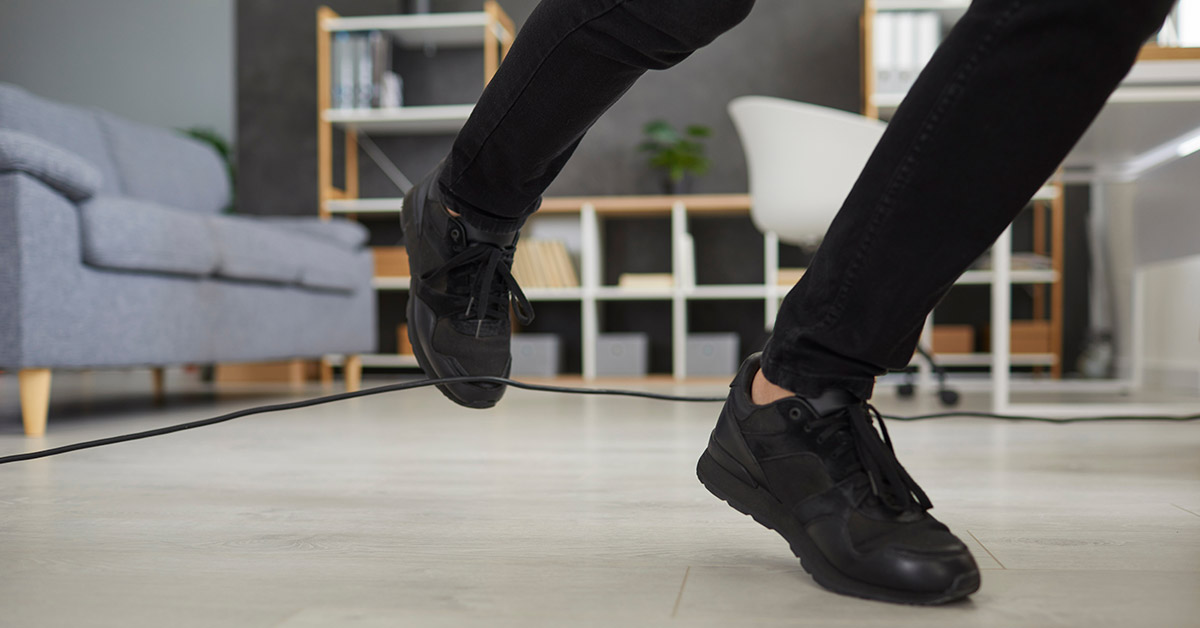
A loose stair. An icy walkway. A broken handrail. Poor lighting in a hallway. Water leaking onto the floor. When a dangerous condition in an apartment building causes an injury, one of the first questions is often: Can you sue a landlord for an injury on their property in Massachusetts? Potentially, yes.
Massachusetts landlords can have legal responsibilities concerning the safety of property they own or control. If a landlord fails to exercise reasonable care and someone is injured as a result, the circumstances may support a personal injury claim.
But an injury occurring on rental property does not automatically make the landlord liable.
You generally need to look at why the accident happened, who controlled the area where it occurred, whether the landlord knew or should have known about the danger, whether there was a reasonable opportunity to address it, and whether the unsafe condition actually caused the injury.
Massachusetts also has specific laws that can apply to unsafe conditions on rental property. Understanding those rules can help an injured tenant, visitor, or family member determine what to do next.
When Can a Landlord Injury Massachusetts Claim Be Filed?
Every landlord injury Massachusetts case depends on the specific facts, including who controlled the property and what caused the accident.
Landlords do not automatically become responsible every time someone gets hurt on their property.
The central issue is usually negligence.
Massachusetts civil jury instructions state that a landlord owes a duty of reasonable care. Depending on the circumstances, a landlord may also have responsibilities to repair defects or address unsafe conditions.
Consider an apartment building with a broken stair.
If the stair suddenly breaks without any warning and the landlord had no reasonable way of knowing there was a problem, determining liability may be difficult.
Now consider a different situation.
Tenants have repeatedly reported the broken stair. The landlord has known about it for weeks but has done nothing. Someone eventually steps on it, falls, and suffers a serious injury.
Those facts create a very different legal question.
The key isn’t simply that someone fell.
It is why they fell and whether reasonable action could have prevented it.
What Does Massachusetts Law Say About Unsafe Rental Property?
Massachusetts has a law specifically addressing certain unsafe conditions on rental property.
Under Massachusetts General Laws Chapter 186, Section 19, a landlord covered by the statute must exercise reasonable care to correct certain unsafe conditions within a reasonable time after receiving the required written notice from a tenant. The statute contains an exception for owner-occupied two- or three-family dwellings. It also provides that notice is not required under that section for unsafe conditions in portions of the premises that are not under the tenant’s control.
If a tenant or another person rightfully on the premises is injured because the landlord failed to correct a covered unsafe condition within a reasonable time, the statute provides a right of action for damages.
What Types of Property Conditions Can Cause Injuries?
Unsafe rental-property conditions can take many forms.
Potential hazards include broken stairs, missing or loose handrails, damaged flooring, poor lighting, unsafe walkways, snow or ice, water on floors, defective doors, dangerous balconies, faulty electrical systems, inadequate security, and other dangerous property conditions.
The type of hazard matters because responsibility for maintaining it may vary.
A broken stair in a common hallway may be under the landlord’s control.
A temporary hazard created entirely inside a tenant’s apartment may raise different questions.
This is why premises liability cases often involve determining who owned, controlled, inspected, repaired, and maintained the area where the injury occurred.
Swartz discusses these issues in its guide I Got Injured on Someone’s Property. Can I Sue?. The article explains that a premises-liability claim can involve showing that a property owner owed a duty of care, failed to exercise reasonable care, and caused an injury and resulting losses.
What if You Fall Down Broken Stairs?
Stair accidents can cause serious injuries, particularly when someone falls several steps or lands on a hard surface.
A dangerous staircase might involve:
- a loose or missing handrail;
- broken or uneven steps;
- inadequate lighting;
- damaged flooring;
- debris or other obstacles; or
- poor maintenance.
Whether a landlord is responsible depends on the circumstances.
Evidence showing that the dangerous condition existed for a significant period or had previously been reported can become important.
The location matters too.
Massachusetts law recognizes distinctions involving areas controlled by tenants and areas outside their control.
That means an accident on a common staircase, lobby, hallway, or other shared area may involve different considerations from an accident caused by something entirely within a tenant’s control.
What if You Slip on Snow or Ice at a Rental Property?
Snow and ice are unavoidable parts of Massachusetts winters.
That doesn’t mean every winter fall is simply bad luck.
Property owners and others responsible for maintaining premises can have duties concerning reasonably safe conditions. Whether a landlord may be liable for a snow or ice injury depends on facts such as who controlled the area, the condition that caused the fall, what maintenance occurred, and whether reasonable care was exercised.
Evidence disappears particularly quickly in snow-and-ice cases.
The ice can melt.
More snow can fall.
The walkway can be treated minutes after the accident.
If you are physically able to do so, photographs taken soon after the accident can become important evidence of what the area looked like when you fell.
What if Poor Lighting Caused the Accident?
Poor lighting can make an otherwise manageable condition dangerous.
Imagine descending an apartment staircase at night when several lights have been broken for weeks. You cannot see a damaged step and fall.
Or perhaps inadequate lighting prevents you from seeing an obstacle in a common hallway.
Lighting conditions may become part of determining whether the property was reasonably maintained.
Swartz’s existing premises-liability content specifically discusses inadequate lighting as a condition that can prevent someone from seeing tripping hazards and other obstacles.
Again, evidence matters.
Photographs showing the lighting conditions, maintenance requests, emails to management, witness statements, and building records may all help establish what conditions existed before the injury.
What if the Landlord Knew About the Problem?
In a landlord injury Massachusetts claim, prior complaints and maintenance requests can become important evidence.
Knowledge of the dangerous condition can be a major issue in a premises-liability case.
Massachusetts Chapter 186, Section 19 specifically addresses written notice of certain unsafe conditions and a landlord’s obligation to exercise reasonable care to correct them within a reasonable time. The statute also provides that notice from a board of health or other code-enforcement agency concerning applicable violations can satisfy its notice requirement.
That makes documentation important.
Suppose you emailed the landlord three times about a broken handrail.
Keep those emails.
If you submitted maintenance requests through an online portal, save copies or screenshots.
If neighbors complained about the same problem, identify them.
If a building inspector or local agency cited the condition, preserve that documentation.
Evidence showing that a landlord was aware of a hazard and had an opportunity to correct it may become significant when determining liability.
Massachusetts Chapter 186, Section 19 states that, when its requirements are met, a tenant or any person rightfully on the premises who is injured because of the failure to correct the unsafe condition may have a right of action.
What if You Never Reported the Dangerous Condition?
That doesn’t automatically mean you have no claim.
Massachusetts Chapter 186, Section 19 itself recognizes circumstances in which the statutory notice requirement does not apply to unsafe conditions in portions of the premises that are not under the tenant’s control.
Other legal principles can also be relevant depending on the circumstances.
For example, a landlord or property manager may have independently known about a dangerous condition through inspections, previous complaints, maintenance work, or other means.
This is why you shouldn’t decide that you have no case simply because you personally didn’t send the landlord a written complaint before the accident.
The entire history of the property condition needs to be considered.
What if the Accident Happens in a Common Area?
A landlord injury Massachusetts case involving a common area may require a close look at who was responsible for inspecting and maintaining that space.
Common areas are particularly important in landlord injury cases.
These can include stairways, hallways, entrances, lobbies, parking areas, laundry rooms, shared walkways, elevators, and other areas used by multiple tenants.
Control of the area can become central to determining responsibility.
If the landlord or property manager controls and maintains a common area, an injured person’s attorney may investigate maintenance practices, inspection procedures, previous complaints, repair records, building-code issues, and other evidence.
Massachusetts law also makes certain lease provisions attempting to exempt landlords from liability for their own negligence void as against public policy. The statute specifically references areas including elevators, stairways, hallways, and related parts of rental property.
Can a Visitor Sue a Landlord?
Potentially.
Landlord liability isn’t necessarily limited to the person whose name appears on the lease.
Massachusetts Chapter 186, Section 19 states that, when its requirements are met, a tenant or any person rightfully on the premises who is injured because of the failure to correct the unsafe condition may have a right of action.
That can matter when the injured person is a tenant’s family member, friend, delivery person, or another lawful visitor.
The exact circumstances still matter, including why the person was on the property and how the accident occurred.
What if a Child Is Injured at a Rental Property?
An injury involving a child deserves particularly careful review.
Children may not recognize hazards the same way adults do, and serious injuries can affect their development, education, and future medical needs.
Swartz & Swartz has extensive content addressing premises liability in child injury cases. Its guide Understanding Premises Liability in Child Injury Cases explains how property ownership, control, reasonable safety measures, and the child’s age can affect the analysis.
Potential child injury cases at rental properties might involve unsafe stairs, windows, balconies, swimming pools, electrical hazards, dangerous common areas, or other unsafe property conditions.
Swartz also maintains a dedicated Boston child injury practice and specifically identifies premises liability among the areas in which children can suffer serious injuries.
What About Inadequate Security at an Apartment Building?
Not every landlord injury case involves a physical defect such as a broken stair.
Some involve security.
For example, an injury could result from inadequate locks, unsafe entrances, failures involving security personnel, or other security conditions.
These cases can be complex because an injured person may need to establish why the property owner or party controlling the property should have taken additional precautions.
Swartz & Swartz has a dedicated Inadequate Security and Premises Liability practice. The firm identifies inadequate security cases involving assaults, failures involving security personnel, unsafe premises, and other circumstances in which property owners or parties controlling property may be legally responsible.
What Injuries Can Result From Unsafe Rental Property?
Premises accidents can cause much more than bruises.
A serious fall can result in broken bones, torn ligaments, head injuries, traumatic brain injuries, spinal injuries, shoulder injuries, hip fractures, or other significant harm.
Swartz’s catastrophic injury practice notes that slip-and-fall accidents can result in injuries ranging from fractures and torn ligaments to traumatic brain and spinal cord injuries.
Some injuries aren’t immediately obvious.
A person may initially believe they are simply sore and then develop significant symptoms hours or days later.
If you are injured, seek appropriate medical care based on your symptoms rather than waiting to see whether a potential legal claim develops.
Your health comes first.
What Should You Do After Being Injured on Rental Property?
If you are physically able, document the condition that caused your injury.
Photograph the broken stair, ice, water, damaged flooring, missing railing, poor lighting, or other hazard.
Take wider photographs showing where the condition was located.
If someone witnessed the accident, get their contact information.
Report the incident to the landlord or property manager and preserve a copy of the report.
Keep emails, text messages, maintenance requests, photographs, medical records, bills, and other relevant documents.
Avoid repairing, discarding, or altering physical evidence yourself if it could become important later.
The goal is to preserve an accurate record of what happened.
Should You Give a Statement to the Landlord’s Insurance Company?
Be cautious.
An insurance representative may contact you and ask how the accident occurred, what you were doing, what injuries you suffered, and whether you had noticed the hazard before.
Don’t speculate.
If you don’t know something, don’t guess.
This becomes especially important when the injury is serious or responsibility is disputed.
An early statement can later become part of the insurance company’s evaluation of your claim.
What if You Were Partly Responsible?
A landlord may argue that the injured person contributed to the accident.
For example, the defense might claim that the hazard was obvious, the injured person was distracted, or they failed to use reasonable care.
That doesn’t automatically end the analysis.
Massachusetts applies comparative negligence principles in personal injury cases. Depending on the allocation of fault, an injured person’s own negligence can affect whether compensation is available and the amount recovered.
The specific facts matter.
This is another reason photographs, witness statements, maintenance records, and other evidence can be so important.
Compensation in a Landlord Injury Massachusetts Case
The value of a landlord injury Massachusetts claim depends on the severity of the injury and the losses it caused
If a landlord or another responsible party is legally liable for an injury, damages will depend on the circumstances and losses involved.
A claim could potentially involve medical expenses, lost income, pain and suffering, future medical needs, reduced earning capacity, and other losses caused by the injury.
A relatively minor injury that resolves quickly will be evaluated differently from a traumatic brain injury, spinal injury, permanent disability, or wrongful death.
The goal of evaluating damages is not simply to add up today’s medical bills.
Serious cases may require consideration of how the injury will affect the person years into the future.
How Long Do You Have to Sue a Landlord in Massachusetts?
Deadlines apply to personal injury claims.
However, the correct deadline can depend on the type of claim, defendant, circumstances of the accident, and other factors.
Certain claims may also involve notice requirements that can arise before the general lawsuit deadline.
For that reason, someone who has suffered a serious injury should not wait until they believe the statute of limitations is about to expire before seeking legal advice.
Evidence also becomes harder to obtain over time.
Surveillance video can be overwritten. Property conditions can change. Employees and tenants can move. Memories fade.
Even when the filing deadline is not close, delay can make proving what happened more difficult.
When Should You Contact a Premises Liability Lawyer?
Not every accident on rental property requires a lawsuit.
But speaking with an attorney may make sense when the injury is serious, the landlord knew about the dangerous condition, the property has a history of complaints, liability is disputed, the insurer denies responsibility, or the injury creates substantial medical expenses or lost income.
A lawyer can investigate who controlled the property, what the landlord knew, whether there were previous complaints, whether applicable safety or building requirements were violated, and what evidence remains available.
Swartz & Swartz’s premises-liability practice focuses on injuries involving unsafe property conditions and inadequate security. The firm’s managing attorney, James A. Swartz, lists inadequate security and premises liability among his practice areas.
Frequently Asked Questions
Can you sue a landlord for an injury on their property in Massachusetts?
Potentially. A landlord may be legally responsible when negligence or a failure to address certain unsafe conditions causes an injury. Liability depends on factors including control of the area, knowledge of the condition, notice, opportunity to correct it, and causation.
Is a landlord automatically responsible if I fall in my apartment building?
No. The fact that an accident occurred on rental property does not automatically establish negligence. The circumstances that caused the accident must be evaluated.
Can I sue if my landlord knew about a broken stair and didn’t repair it?
Potentially. Evidence that the landlord knew about an unsafe condition and failed to address it within a reasonable time can be important. Massachusetts Chapter 186, Section 19 specifically addresses certain unsafe conditions and injuries resulting from a landlord’s failure to correct them after required notice.
Can a guest sue a landlord after being injured?
Potentially. Massachusetts Chapter 186, Section 19 refers not only to tenants but also to people rightfully on the premises when the statute’s other requirements are met.
What evidence should I save after an accident?
Photographs and video of the dangerous condition, witness information, maintenance requests, emails or texts to the landlord, incident reports, medical records, bills, and other documentation related to the accident can be useful.
Can I sue for an injury in a common hallway or stairway?
Potentially. Control and maintenance of the area are important factors. Massachusetts law also specifically addresses certain lease provisions attempting to shield landlords from liability involving areas such as elevators, stairways, and hallways.
What if my child was injured at the rental property?
The circumstances should be evaluated carefully. Massachusetts premises-liability law can involve special considerations concerning children, and the severity and long-term consequences of the child’s injury may also affect a claim.
Can a landlord put something in the lease saying they aren’t responsible for injuries?
Massachusetts General Laws Chapter 186, Section 15 states that lease provisions that attempt to indemnify or exonerate a landlord from liability for injury arising from the landlord’s own negligence or misconduct are against public policy and void.
Injured Because of an Unsafe Rental Property in Massachusetts?
So, can you sue a landlord for an injury on their property in Massachusetts?
In some circumstances, yes.
But the fact that the accident occurred at an apartment or rental property isn’t enough by itself.
The stronger questions are:
Who controlled the area?
What made it dangerous?
Did the landlord know or have reason to know about the condition?
Was there an opportunity and duty to correct it?
Was the condition actually responsible for the injury?
Those questions are often answered through evidence such as photographs, maintenance requests, inspection records, witness statements, medical records, and information about previous complaints.
Massachusetts law also provides specific protections concerning certain unsafe rental-property conditions. Chapter 186, Section 19 can provide a right of action when its requirements are met and a person rightfully on the premises is injured because a landlord failed to exercise reasonable care to correct an unsafe condition.
If you or a family member suffered a serious injury because of an unsafe property condition, Swartz & Swartz, P.C. handles premises-liability and personal-injury cases from its Boston office. The firm has decades of experience representing injured people and families in negligence cases.
Need Help?
If you or someone you know, needs help from a lawyer, contact the law offices of Swartz & Swartz, use our live chat, or send us a message using the form below and we’ll get in touch to assess your case and how we can help.
About the Author: James Swartz

Keep Reading
Want more? Here are some other blog posts you might be interested in.


A toy marked “3+” can look like a simple promise: this product is safe once a child reaches a third

A car accident happens in seconds, but the physical effects do not always appear immediately. You may walk away from a

You walk into a grocery store, pharmacy, department store, restaurant, or other business expecting to shop, not leave in an