

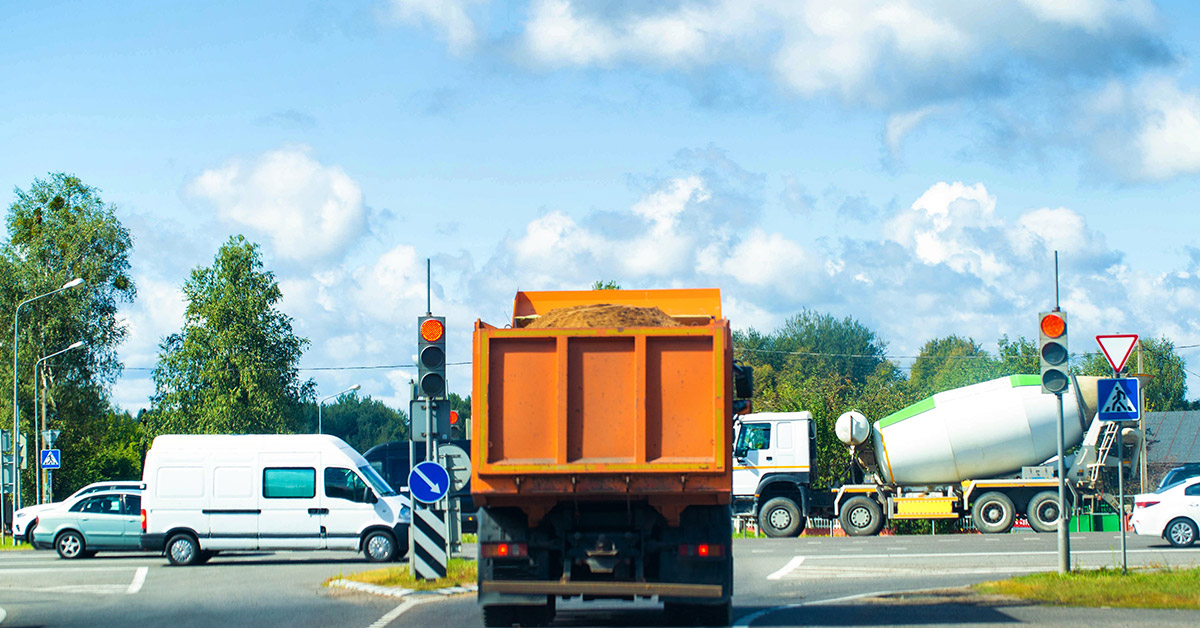
You enter an intersection with a green light. Another vehicle comes from the side and does not stop. Within seconds, a normal drive becomes a serious car accident. Red-light collisions can be particularly dangerous because the driver who has the green light may have little or no time to react. Depending on the direction and speed of the vehicles, the crash may involve a direct impact into the driver’s or passenger’s side of a vehicle. If you are injured in a red light accident in Massachusetts, it may seem obvious that the driver who ran the light should be responsible.
Sometimes the evidence supports exactly that conclusion.
But determining legal responsibility still requires evidence showing what happened at the intersection. Drivers may disagree about which light was red. Witnesses may have different recollections. An insurance company may argue that the injured driver was speeding, distracted, or otherwise contributed to the collision.
Understanding Massachusetts traffic laws and preserving evidence early can therefore be important after a serious intersection accident.
What Does Massachusetts Law Say About Red Lights?
Massachusetts has specific rules governing traffic at intersections.
Massachusetts General Laws Chapter 89, Section 8 addresses right-of-way rules at intersections and vehicles facing a steady red traffic signal.
The law allows a driver who has properly stopped at a steady red signal to make a right turn, or in certain circumstances a left turn from one one-way street onto another one-way street, unless that turn is prohibited. But the driver must yield to pedestrians and other traffic proceeding as directed by the signal.
The important point is that a red signal is not permission to drive straight through an intersection.
When someone disregards a traffic signal and causes a red light accident in Massachusetts, the violation can become important evidence when investigating who was responsible.
For the official rule, readers can review Massachusetts General Laws Chapter 89, Section 8.
Is the Driver Who Ran the Red Light Automatically at Fault?
Not necessarily automatically, although running the red light can be powerful evidence.
A personal injury case requires looking at the circumstances surrounding the collision.
Suppose Driver A enters an intersection on a green light.
Driver B drives through a red light from the cross street and crashes into Driver A.
Evidence confirming that sequence would obviously be important when determining whether Driver B’s actions caused the accident.
But sometimes the facts are disputed.
Driver B might claim the light was yellow.
Both drivers might insist they had a green light.
The other driver’s insurer might argue that Driver A was speeding and could have avoided the collision.
That is why an investigation should focus on evidence rather than assumptions.
What Evidence Can Prove Someone Ran a Red Light?
This may be the central issue in a disputed red light accident Massachusetts claim.
Useful evidence can include:
- witness statements;
- police reports;
- photographs;
- video footage;
- dashcam recordings;
- vehicle damage;
- physical evidence from the intersection;
- electronic vehicle information when available; and
- accident reconstruction evidence in serious cases.
Independent witnesses can be especially valuable.
If someone standing on the sidewalk clearly saw the other vehicle enter against the red light, obtain that person’s contact information if circumstances allow.
Do not assume the police report will contain every witness who saw what happened.
Are There Red-Light Cameras in Massachusetts?
Do not assume there will be a camera simply because the accident occurred at a signalized intersection.
However, other video sources may exist.
Nearby businesses, homes, parking facilities, municipal buildings, buses, or other vehicles may have cameras that captured the crash or the moments immediately before it.
Some footage is automatically deleted after a relatively short period.
For that reason, identifying potential video evidence quickly can be important.
A dashcam recording can be particularly useful when both drivers tell different stories about the traffic signal.
What if Both Drivers Say They Had a Green Light?
This is one of the more difficult versions of a red-light accident.
There may be no immediate admission.
Driver A says:
“The light was green.”
Driver B says exactly the same thing.
The investigation may then depend on other evidence.
Were there witnesses?
Was there video?
Where did the vehicles collide?
What were their directions of travel?
Did either driver make a statement immediately after the crash?
What did each driver tell police?
Does the physical evidence support one version more than the other?
In a serious collision, accident reconstruction professionals may sometimes be used to analyze vehicle movement, impact locations, speeds, roadway evidence, and other information.
Swartz’s Boston Car Accident Lawyers page explains that accident reconstruction and expert witnesses may be relevant when investigating the cause of a motor vehicle collision.
What if the Other Driver Says the Light Was Yellow?
A yellow light can create another factual dispute.
A driver may insist that they entered the intersection before the signal turned red.
Witness testimony, video, vehicle positions, and other evidence may become particularly important.
The issue should not be reduced to which driver sounds more confident when speaking with an insurance adjuster.
The goal is to reconstruct what actually happened.
What if Someone Turns Right on Red and Hits You?
Massachusetts generally permits certain turns on red after a driver has stopped, unless a posted restriction prohibits the turn.
But that does not give the turning driver unlimited right of way.
Chapter 89, Section 8 requires a driver making a permitted turn against a red signal to yield to pedestrians and other traffic proceeding as directed by the signal.
Imagine that you are traveling through an intersection with the green light.
Another driver stops at a red light and then turns right directly into your path.
The fact that a right turn on red was permitted does not necessarily excuse failing to yield.
Swartz’s article What Happens if Another Driver Fails to Yield in Massachusetts? provides a broader explanation of Massachusetts right-of-way rules and how failure to yield can affect an accident claim.
What if a Left-Turning Driver Runs the Light?
Intersection accidents can involve several traffic rules at the same time.
For example, a driver waiting to turn left may enter or remain in an intersection while the traffic signal changes. Another vehicle may approach from the opposite direction.
Determining responsibility may require examining:
the traffic signal;
when each vehicle entered the intersection;
whether the left-turning driver yielded;
the speed of the approaching vehicle;
and what each driver reasonably could have done.
Massachusetts law also generally requires a driver intending to turn left across the path of oncoming vehicles to yield until the turn can be made with reasonable safety.
For more detail, Swartz’s Who Is at Fault in a Left-Turn Accident in Massachusetts? explains how right-of-way rules, speed, traffic signals, and the conduct of both drivers can affect fault.
Evidence confirming that sequence would obviously be important when determining whether Driver B’s actions caused the accident.
What Injuries Can a Red-Light Collision Cause?
A red light accident in Massachusetts can cause anything from relatively minor injuries to catastrophic trauma.
Side-impact collisions can be particularly serious because one vehicle may strike the side of another vehicle near where the occupants are sitting.
Depending on the crash, injuries may include:
neck and back injuries;
fractures;
shoulder injuries;
knee and leg injuries;
head injuries;
concussions;
traumatic brain injuries;
internal injuries;
spinal injuries;
and other serious trauma.
Swartz notes that motor vehicle crashes can result in head, neck and brain injuries, fractures, internal injuries, spinal injuries, and other significant harm.
Some injuries are obvious immediately.
Others are not.
What Should You Do Immediately After a Red-Light Accident?
Your first priority should be safety and medical care.
Call 911 if emergency assistance is necessary.
If you can safely do so, gather information about the crash.
Photograph the vehicles, intersection, traffic signals, roadway, damage, debris, skid marks, and anything else that may help establish what occurred.
Obtain the other driver’s insurance and contact information.
If there are witnesses, ask for their names and contact details.
Swartz’s car accident guidance similarly recommends documenting the location, time, road conditions, witnesses, vehicle information, and circumstances of the crash.
Do not put yourself in danger trying to collect evidence.
Medical needs come first.
Should You See a Doctor if You Feel Fine?
Do not ignore symptoms simply because you were able to walk away from the crash.
Adrenaline and shock can make it difficult to understand the extent of an injury immediately after an accident.
If you have pain, dizziness, headache, confusion, numbness, weakness, difficulty moving, or other concerning symptoms, seek appropriate medical attention.
Some injuries become more noticeable in the hours or days after a collision.
Medical records can also document when symptoms began and what treatment was required.
What if You Hit Your Head?
Head injuries deserve particular attention.
A person does not necessarily need to lose consciousness to experience a concussion or other brain injury.
Symptoms may include headaches, dizziness, nausea, sensitivity to light, difficulty concentrating, memory problems, fatigue, or changes in mood.
If you experience concerning neurological symptoms after a collision, seek appropriate medical care.
A serious red-light collision can generate substantial force, particularly when one vehicle strikes the side of another at speed.
Should You Talk to the Other Driver’s Insurance Company?
Be careful.
The other driver’s insurer may contact you shortly after the accident and ask for information about what happened, your injuries, and your medical treatment.
You should provide truthful information when legally required, but you do not need to speculate.
If you do not know your speed at the exact moment of impact, do not guess.
If you do not yet know the extent of your injuries, do not assume that you are completely recovered.
An early statement may later become important if there is a dispute about fault or damages.
What if the Other Driver Admits Running the Red Light?
An admission can be useful evidence, but preserve it when possible.
For example, a driver might say at the scene:
“I didn’t see the light.”
Or:
“I thought I could make it.”
Witnesses may hear the statement. It may appear in a police report or potentially be captured on video.
Do not assume an admission at the scene means the insurance company will automatically accept responsibility later.
Claims are evaluated based on the available evidence.
What if the Police Give the Other Driver a Ticket?
A traffic citation can be relevant, but a personal injury case is not necessarily resolved solely because a ticket was issued.
The civil claim still requires evaluation of the accident, causation, injuries, and damages.
Likewise, the absence of a citation does not necessarily mean the other driver was not negligent.
Police officers frequently arrive after an accident has already occurred.
Their conclusions may depend on what they observe and what witnesses tell them.
What if You Were Partially at Fault?
Massachusetts follows a modified comparative negligence rule.
That means an injured person may potentially recover damages even when they share some responsibility, provided their negligence does not exceed the combined negligence of the person or persons from whom recovery is sought. Any damages are reduced in proportion to the injured person’s percentage of negligence.
For example, suppose another driver ran a red light but an injured driver was also found partly responsible because of excessive speed.
The other driver’s red-light violation may still be the primary cause of the collision, but the injured driver’s conduct could potentially affect the amount recovered.
This is another reason not to assume that a red-light violation automatically resolves every issue in the case.
What Compensation May Be Available After a Red-Light Accident?
The damages depend on the injuries and circumstances.
A serious car accident claim may involve:
medical expenses;
lost wages;
reduced earning capacity;
future medical treatment;
rehabilitation;
pain and suffering;
disability;
and other losses caused by the collision.
Swartz’s car accident practice page discusses medical bills, lost wages, insurance coverage, accident investigation, and other issues that may arise after a Massachusetts motor vehicle collision.
The value of a claim should be based on the actual effect of the injury rather than the fact that the other driver received a traffic citation.
What if You Cannot Work After the Accident?
Lost income can become a major issue after a serious crash.
Perhaps your doctor keeps you out of work for several weeks.
Maybe you return part-time.
Or the injury may permanently prevent you from returning to your previous occupation.
Keep employment records, pay stubs, medical work restrictions, tax documents, and other information showing how the injury affected your ability to earn income.
For a permanent injury, future loss of earning capacity may also become relevant.
What if the Other Driver Does Not Have Enough Insurance?
A severe injury can create expenses far beyond the available liability coverage.
That makes it important to identify all potentially applicable insurance.
Depending on the circumstances and policy terms, your own automobile coverage may also become relevant, including uninsured or underinsured motorist coverage.
Insurance issues can become especially important when the accident causes catastrophic injuries requiring extensive medical care or preventing someone from returning to work.
How Long Do You Have to Bring a Claim?
Massachusetts law imposes deadlines on personal injury claims.
The applicable deadline can depend on the type of claim and circumstances, so an injured person should not assume there is unlimited time.
Waiting can also create practical problems even before a legal deadline arrives.
Video may be deleted.
Witnesses may become difficult to locate.
Vehicles may be repaired or destroyed.
Memories fade.
Physical evidence from the intersection can change.
A red light accident Massachusetts claim can depend heavily on evidence showing what the traffic signal displayed at a particular moment. Preserving that evidence early can therefore be especially important.
Why Intersection Accident Cases Can Become Complicated
At first glance, these cases can seem simple.
One driver had a red light.
The other had a green light.
Case closed.
But real accidents are often more complicated.
There may be disputes about the signal.
The intersection may have multiple turn lanes.
A driver may have been turning right on red.
Another may have been turning left.
A pedestrian or cyclist may have been crossing.
One vehicle may have been speeding.
The drivers may provide completely different accounts.
Determining responsibility requires looking at the entire sequence rather than one isolated fact.
Frequently Asked Questions
Who is at fault if someone runs a red light and hits you in Massachusetts?
The driver who disregarded the red signal may be responsible if that conduct caused the accident, but fault should be determined from the circumstances and available evidence rather than assumed automatically.
Is running a red light negligence in Massachusetts?
Failing to obey a traffic signal can be important evidence when determining negligence. A personal injury claim still requires evaluating causation, injuries, damages, and the conduct of everyone involved.
What if the other driver says the light was green?
Evidence such as witnesses, video, dashcam footage, police information, vehicle damage, and accident reconstruction may help determine which account is supported by the facts.
Can you turn right on red in Massachusetts?
Generally, after stopping, Massachusetts law permits a right turn on red unless prohibited at the intersection. The driver must yield to pedestrians and other traffic proceeding as directed by the signal.
What if someone turns right on red and hits me?
A driver making a permitted right turn on red must still yield appropriately. Failure to yield to traffic proceeding through the intersection may become important when determining responsibility.
Can I recover compensation if I was partly responsible?
Potentially. Massachusetts uses modified comparative negligence. A person’s percentage of responsibility can reduce the damages recoverable, and recovery is barred if the person’s negligence exceeds the combined negligence of the party or parties from whom recovery is sought.
What should I photograph after a red-light accident?
If it is safe, photograph the vehicles, damage, intersection, traffic lights, roadway markings, debris, skid marks, signs, and surrounding area. Evidence showing the configuration of the intersection may later be useful.
Should I contact a lawyer after a red-light collision?
If you suffered significant injuries or fault is disputed, speaking with a Massachusetts car accident attorney can help you understand the applicable insurance issues, evidence, deadlines, and potential legal options.
After a Red Light Accident in Massachusetts
If someone runs a red light and hits you in Massachusetts, the fact that they violated the signal may become important evidence of how the crash occurred.
But do not assume that the insurance claim will automatically resolve itself.
Preserve evidence.
Identify witnesses.
Look for potential video.
Document the intersection.
Obtain appropriate medical care.
Keep records of your treatment, expenses, and time away from work.
And avoid guessing about facts you do not know.
A red light accident in Massachusetts can cause serious injuries in seconds, particularly when one vehicle enters an intersection with no opportunity to avoid another car coming from the side.
Swartz & Swartz represents people and families injured in motor vehicle accidents throughout Boston and Massachusetts. The firm’s car accident practice includes investigating accident causes, evaluating insurance coverage, gathering evidence, and addressing injuries and financial losses resulting from negligent driving.
When the drivers disagree about what happened, the evidence can matter just as much as the traffic light itself.
Need Help?
If you or someone you know, needs help from a lawyer, contact the law offices of Swartz & Swartz, use our live chat, or send us a message using the form below and we’ll get in touch to assess your case and how we can help.
About the Author: James Swartz

Keep Reading
Want more? Here are some other blog posts you might be interested in.

Inadequate security at an apartment building in Massachusetts can have devastating consequences when a preventable safety failure contributes to a
Emotional distress after a car accident in Massachusetts can be just as disruptive as a physical injury, yet it is

A family gathering can feel like the safest place for a child to meet a friendly dog. The dog may