

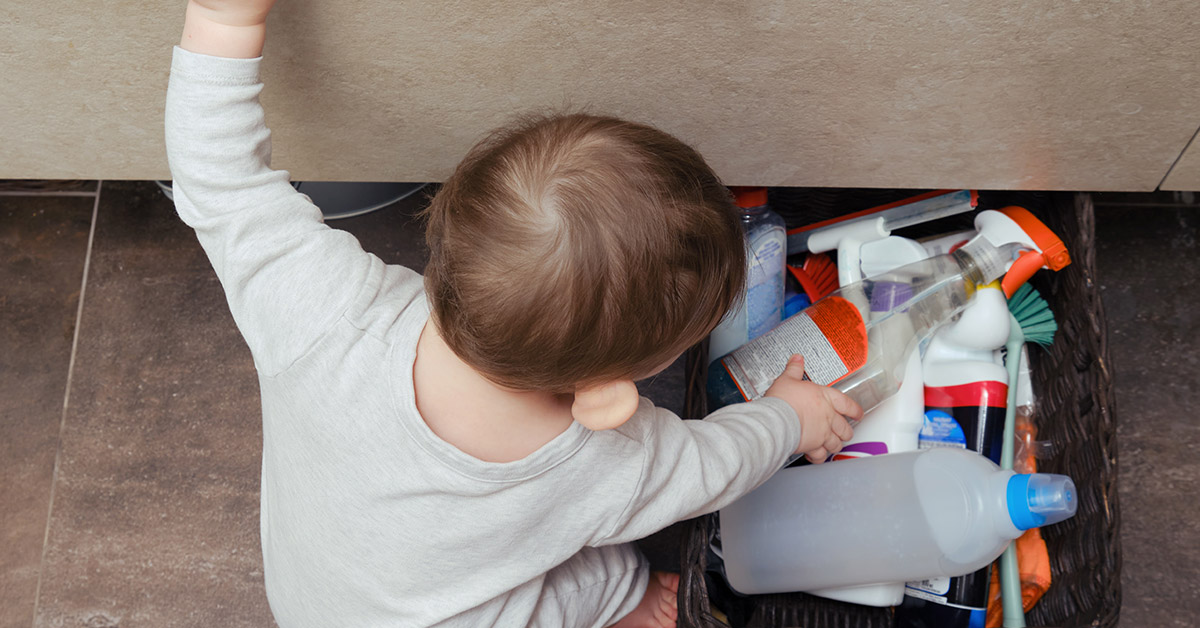
A bottle of bleach can feel like a trusted part of a clean home. Yet a second cleaner can turn that routine task into a threat to a child’s lungs. A child can suffer harm without swallowing a cleaner or touching a spill. Breathing gas from a mix can cause harm before an adult knows what has gone wrong. Families in Boston, Massachusetts, and the surrounding New England states should understand both the medical risks and the legal options they may have when a child suffers harm.
This article explains how mixed cleaners hurt children, what safety rules require, how exposure happens, and what families can do. The facts can help parents make sound choices when fear and stress make each next step feel hard. Care for the child comes first, while questions about the cause can wait until everyone reaches safety. A personal injury attorney can then review the case and explain whether the facts may support a claim for medical bills, hospital costs, and related losses.
Why Mixed Cleaners Can Harm a Child’s Lungs
Household bleach often contains sodium hypochlorite, a chemical that kills germs. Mixing it with an acid, such as vinegar or some toilet bowl cleaners, can release chlorine gas. Mixing bleach with ammonia, which some glass cleaners contain, can form harmful chloramine gases. The Washington State Department of Health explains these reactions and the harm they can cause. A familiar scent or a common brand does not make a mix safe.
These gases attack moist tissue in the eyes, throat, and lungs. A child may cough, wheeze, or struggle to draw a breath as the airways swell or tighten. A strong exposure can cause fluid to build up in the lungs, a condition doctors call pulmonary edema. Some symptoms start at once, while others develop over the next few hours. The CDC’s chlorine guidance also warns that people with asthma may face greater risks.
Children breathe more air for their size than adults do. Their small airways leave less room for swelling, and young children may not know how to leave the source. The federal Agency for Toxic Substances and Disease Registry describes children’s added risk from these exposures. Chlorine gas can also settle in low spots because it weighs more than air. A child near the floor may face a risk that an adult standing in the room does not expect.
What Poison Exposure Numbers Tell Parents
The 2024 National Poison Data System annual report, published in Clinical Toxicology in 2025, offers a recent national view. It lists household cleaning substances as the most common exposure category for children ages five and younger. That group accounted for 9.96 percent of reported exposures in that age range. The finding shows that common home products remain a major source of poison center calls. It does not mean that one in ten children suffers a cleaner injury.
An earlier CDC study of poison center reports adds context about breathing hazards. During January through March 2020, poison centers received 45,550 calls about exposures to cleaners and disinfectants across all ages. Compared with the same months in 2019, reported inhalation exposures rose 35.3 percent for cleaners and 108.8 percent for disinfectants. Those figures cover many products and types of use. They do not count only children, gas mixtures, or hospital visits.
Parents should read these numbers with those limits in mind. A call can concern a possible exposure that causes no harm, and some families never call a poison center. These reports cannot tell us how many children in Boston breathed gas from mixed cleaners this year. They do show why labels, safe storage, and clear cleaning plans matter. A sound account of the risk needs both the scale of the reports and the limits of what they measure.
What Safety Rules Require and What They Cannot Prevent
The Federal Hazardous Substances Act sets warning rules for covered hazardous household products. The CPSC explains that required labels must address hazards, precautions, and first aid when appropriate. Its rule at 16 CFR 1500.121 governs how firms display those warnings. Clear print, placement, and contrast matter when someone needs to spot a hazard before use. The precise duties depend on the product and which agency governs it.
Disinfectants also fall within the EPA’s system for products that control pests, including germs. The EPA reviews their labels as part of registration. Parents should follow those directions for the surface, use, and contact time. The EPA advises that children should not apply disinfectants, including disinfectant wipes. A germ killing claim does not mean a product is safe for a child to handle.
Packaging rules offer another layer of protection, but they do not cover every cleaner in the same way. Under 16 CFR 1700.14, certain listed substances require special packaging based on their contents and strength. A cap that resists a child’s efforts cannot stop an adult from mixing two products. Nor can a label remove gas from a room once a reaction starts. Families still need a plan that keeps children away from cleaning work.
Recent recalls show why packaging deserves its own check. In April 2024, the CPSC announced a recall of about 8.2 million bags of laundry detergent packets. The notice covered certain Tide, Gain, Ace, and Ariel bags whose outer packaging could split near the zipper. That recall concerned access to packets, not toxic gas from mixed cleaners. It illustrates a separate safety layer and should not serve as proof that a gas exposure involved a recalled product.
If liquid splashes the eyes, start rinsing with room temperature water for 15 to 20 minutes and seek poison center guidance.
How Exposure Can Happen in a Careful Home
These injuries do not require a careless parent. An adult may use one cleaner without knowing that someone else left another on the same surface. A caregiver may see a clean toilet bowl but miss a product still inside it. A paid cleaner may bring a spray that the family has never used. Such examples explain possible paths to exposure; they do not describe a specific family’s case.
Poison specialists document how routine cleaning can go wrong. In a case described by the National Capital Poison Center, a woman mixed ammonia with bleach and noticed a chlorine like smell. A poison specialist explained the risk from chloramine gas. That adult case does not establish how often children face the same event. It does show why a familiar cleaning task can produce a hazard that the person doing it fails to recognize.
Other risks arise when people change products during the same task. A bucket, brush, or drain may hold residue even after the first bottle leaves the room. A closed door and poor airflow can increase exposure in a small space. These conditions can place a child at risk despite locked storage elsewhere in the home. The right inquiry asks what each person used, where the products met, and how gas reached the child, without starting from blame.
Warning Signs and What to Do After Exposure
If fumes from mixed cleaners reach a child, stop the task and move to fresh air. Do not wait to identify the gas before leaving. The National Capital Poison Center’s first aid guidance directs callers to seek fresh air after inhalation. Call 911 for trouble breathing, collapse, a seizure, or a child who cannot wake. For other suspected exposures, call Poison Control at 1-800-222-1222 from a safe place and describe what happened.
Watch for these warning signs and report them to medical staff:
- Coughing that persists or gets worse, wheezing, or noisy breaths.
- Fast breathing, chest pain, or trouble speaking or crying due to breathlessness.
- Burning eyes, tears, throat pain, or a hoarse voice.
- Blue or gray lips, fainting, confusion, or trouble staying awake.
Leave the affected room and keep others out until responders say it is safe. Do not lean over a bucket, try to neutralize the mix, or return for a bottle. A mask made for dust does not make a toxic gas area safe to enter. Tell the dispatcher if someone remains inside so trained crews can respond. Open a door or window only if you can do so without more exposure or delaying escape.
If liquid splashes the eyes, start rinsing with room temperature water for 15 to 20 minutes and seek poison center guidance. Rinse exposed skin with running water and remove clothing that holds spilled cleaner. Federal medical guidance for hypochlorite exposure warns that lung symptoms can worsen over time. Follow the clinician’s advice about exams, observation, and return precautions. A brief improvement does not replace an assessment when symptoms persist or breathing becomes hard.
Once the area is safe, preserve the product, packaging, receipts, and medical documentation. Photograph labels and lot codes without handling a dangerous mix. Keep a record of the time, products used, witnesses, and the child’s symptoms. Ask responders or a qualified professional how to handle hazardous remnants; do not save an active mixture in your home. Counsel may help arrange safe evidence storage when the facts warrant further review.
Practical Ways to Reduce the Risk
Use one product for a task and follow its label. Do not combine cleaners to make a stronger solution or copy a cleaning recipe from social media. The CDC advises against mixing bleach or disinfectants with other cleaners. When a label calls for dilution, use only the stated method. Avoid guessing about what remains on a surface before you switch products.
Keep products in their original containers with labels intact, behind a lock and out of children’s reach. Do not pour cleaner into a drink bottle or a spare spray bottle that once held another chemical. Check the CPSC recall database for the exact product and lot, and follow the listed remedy if you find a match. A search that shows no recall does not establish that a product or mixture is safe. Recall checks support, rather than replace, safe use.
Talk with grandparents, babysitters, and hired cleaners about which products they use and when. Ask who will keep children away until the work ends and the space is safe. Have the same talk about a second home, child care site, or rental where your child spends time. Keep Poison Control’s number in each caregiver’s phone. A shared plan helps prevent one person’s cleaning choice from colliding with another’s.
Legal Options After a Child Suffers Harm
A lawyer may review product liability theories when evidence points to a defect. A design defect claim may concern an unsafe product or packaging design; a manufacturing defect claim may concern a batch that differs from its intended formula. A failure to warn claim may arise if a company gave inadequate warnings about a foreseeable risk. Each theory will require proof that the claimed defect legally caused the child’s injury. An exposure alone does not establish that a manufacturer may bear responsibility.
Negligence may apply if a cleaner, caregiver, or business failed to use reasonable care. Premises liability may warrant review if a property owner or operator knew, or should have known, of a harmful condition and failed to address it. Landlord liability may also merit review when a condition within the landlord’s duties helped cause the exposure. Massachusetts housing rules at 105 CMR 410.220 address ventilation. A ventilation issue may matter to the facts, but it does not by itself establish a claim or make chemical mixing safe.
Massachusetts and each of the surrounding New England states have their own statutes of limitations. Rules that affect a child’s claim may differ from rules that affect a parent’s claim, so families should seek advice without assuming they have extra time. A lawyer may assess which state’s law applies, who controlled the products and property, and what medical proof connects the exposure to harm. Depending on the facts, compensation may be available for treatment, hospital care, future medical needs, and related losses. No recall, code issue, or diagnosis can guarantee a legal outcome.
Talk to a Child Injury Lawyer About Your Family’s Case
These cases can involve complex questions about chemistry, lung damage, and the cause of an exposure. A full review may require product testing, expert testimony, medical records review, and regulatory analysis. A team may need to compare the label with the formula and trace who used each product. Most families cannot conduct that work on their own while caring for an injured child. Legal counsel may help identify which facts and experts the case needs.
At Swartz & Swartz, P.C., our Boston child injury lawyers can review your case, answer your questions, and offer aggressive representation should you decide to work with us. If your child was harmed by toxic gas from mixed household cleaners in Boston, Massachusetts, or the surrounding New England areas, learn more by contacting us online today or calling us at (617) 742-1900 to set up your free case review.
Need Help?
If you or someone you know, needs help from a lawyer, contact the law offices of Swartz & Swartz, use our live chat, or send us a message using the form below and we’ll get in touch to assess your case and how we can help.
About the Author: James Swartz

Keep Reading
Want more? Here are some other blog posts you might be interested in.

A bottle of bleach can feel like a trusted part of a clean home. Yet a second cleaner can turn

A denied personal injury claim in Massachusetts does not necessarily mean you have lost your right to compensation. Insurance companies

A child left unattended at daycare in Massachusetts can face serious dangers in a matter of seconds. Parents trust childcare