

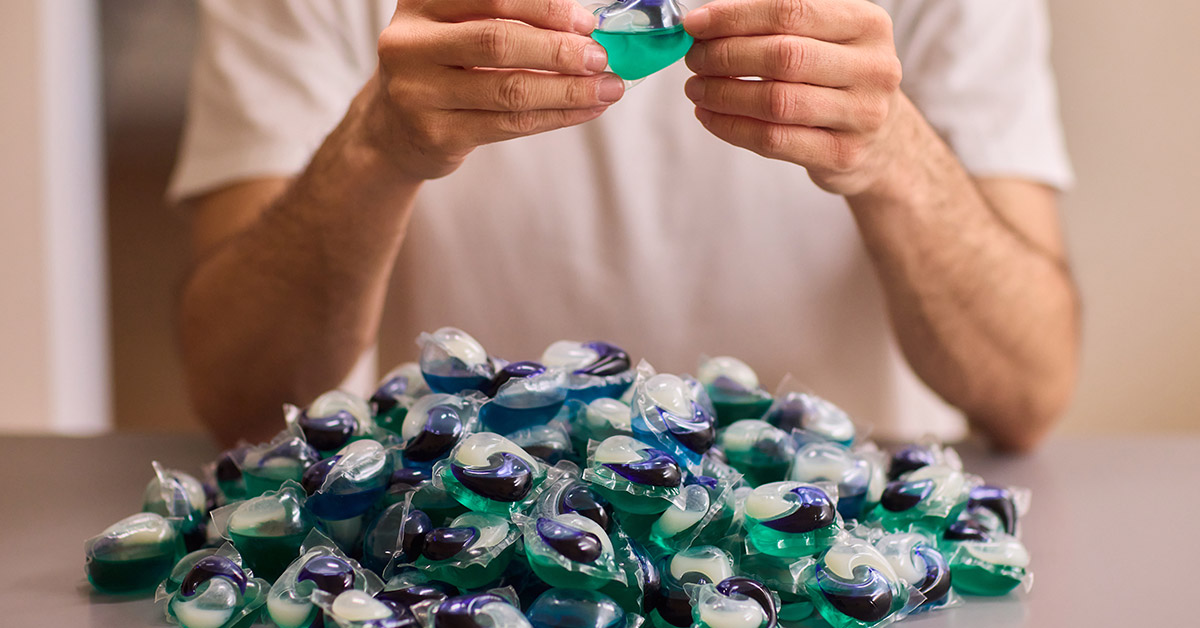
Few common household products land more young children in the emergency room than laundry detergent pods. Pediatric emergency physicians have described them as a perfect storm of danger for small children, and the description is accurate. The pods are soft, brightly colored, and small enough for a curious toddler to fit in their mouth. The detergent inside is far more concentrated than what you would find in a bottle of liquid detergent or even bleach, which means the symptoms following a bite are often dramatic, fast, and severe. Parents in Boston, throughout Massachusetts, and across the surrounding New England states should understand both the medical reality of pod exposures and the legal options available when a child is harmed.
This overview walks through why pods cause such serious injuries, what current safety standards do and do not require, how exposures still happen in homes that look childproofed, and what families can do when a child is injured. If your child has been hospitalized after a laundry pod exposure, a personal injury attorney can review the facts of your case and help you understand whether you may have grounds to seek compensation for medical bills and related losses.
Why Laundry Pods Are So Much More Dangerous Than Regular Detergent
A child who tastes a few drops of bottled liquid detergent will usually have an upset stomach and recover with rest and fluids. A child who bites into a laundry pod can develop life-threatening symptoms within minutes. The difference comes down to chemistry and physics. The detergent inside a pod is highly concentrated to fit into a small dissolvable film, and that film breaks under the pressure of a child’s bite. The contents do not trickle out. They burst into the mouth and throat under pressure, often coating the airway before a parent can intervene.
Pediatric emergency physicians have documented children whose throats began closing within minutes, requiring intubation and mechanical ventilation. Other reported effects include severe vomiting, chemical burns to the mouth and esophagus, respiratory distress, seizures, loss of consciousness, and coma. Eye exposures, which happen when a child squeezes a pod and the contents spray, can cause corneal burns and lasting vision problems. Several pediatric deaths have been linked to laundry pod ingestion in the United States, alongside deaths in adults with dementia who mistook pods for candy or food.
The Scope of the Problem in Numbers
Researchers studying calls to U.S. poison control centers have found exposure rates that should embarrass any product category meant to be a household staple. From 2012 to 2015, poison control centers received nearly 73,000 calls about laundry pod exposures, which works out to roughly 40 cases per day. More recent analyses have shown that calls about laundry packet ingestions come in roughly every 44 minutes, with the overwhelming majority of those exposures occurring in young children.
Exposures did decline somewhat after manufacturers began voluntary changes in 2013, and again after a voluntary safety standard was published in 2015. However, the decline was modest, only about 18 percent for children younger than six between 2015 and 2017. By comparison, when Congress passed the Poison Prevention Packaging Act in 1970 and required childproof closures on toxic products, ingestion of children’s aspirin dropped between 40 and 55 percent within two to three years. The contrast tells the story. The voluntary pod standard has helped, but not nearly enough.
What ASTM F3159 Requires and Why It Falls Short
The voluntary safety standard for laundry pods is known as ASTM F3159, first published in 2015. It calls on manufacturers to use opaque outer containers so children cannot see the colorful pods inside, child-resistant container closures, clearer warning labels, a bitter-tasting coating on the outer film to discourage biting, a minimum burst strength so the film does not rupture too easily, and a delayed dissolution time so the film does not melt the instant it touches saliva.
Several gaps weaken the standard. It is voluntary, which means manufacturers are not legally bound to follow it. The child-resistant packaging requirement can be met in several different ways, and not all of those ways are equally effective. The standard applies to the outer container, but a child who has already removed one pod and set it on a counter is no longer protected by any of these measures. Researchers and pediatric safety advocates have repeatedly called for stronger, mandatory federal requirements that would treat pods the same way over-the-counter medicines are treated under the Poison Prevention Packaging Act. That step has not yet been taken.
How Exposures Still Happen in Careful Households
Many parents assume that if they store pods on a high shelf or in a child-resistant tub, the danger is handled. The reality is more complicated. Emergency physicians frequently treat children whose parents had taken sensible precautions at home. Several patterns recur in pediatric case reports.
The most common is the laundry-day exposure. A parent transfers clothes from washer to dryer, sets the pod container down for a moment, and turns around to find a child holding one. Children move fast, and a single unattended container on a laundry room floor is often all it takes. Pods can also end up loose, having fallen from the container or been pulled out by an older sibling, and they remain on the floor or under appliances where small children find them later.
Exposures also happen at second locations. A child who lives in a pod-free home may visit a grandparent, an aunt or uncle, a babysitter, or a friend whose family does store pods. Daycare centers, after-school programs, and even hotel rooms during travel can be sources of exposure. The product is so common that complete avoidance away from home is nearly impossible, and visiting children have not been trained to recognize the pods as off-limits.
Older children and teenagers present a different problem. A viral social media trend known as the Tide Pod Challenge produced a spike in intentional ingestions among adolescents, with poison control centers reporting dozens of cases tied to the trend in 2016 and 2017. The trend has faded, but pediatricians warn that copycat behavior can resurface, and adolescents with mental health concerns sometimes use pods as a self-harm tool.
Symptoms That Should Prompt an Immediate Call to Poison Control
Because the severity of a pod exposure can escalate quickly, parents and caregivers should treat any contact as a possible emergency. Call Poison Help at 1-800-222-1222 immediately. Symptoms that warrant an immediate trip to the emergency room include:
- Persistent or violent vomiting following a suspected exposure
- Difficulty breathing, wheezing, or noisy breathing
- Drooling, coughing, or choking that does not resolve within seconds
- A bluish tint to the lips or skin
- Sudden lethargy, confusion, seizures, or loss of consciousness
- Eye redness, pain, or excessive tearing after the pod contents have splashed
- Burns or blistering inside the mouth, on the lips, or on the skin
Do not wait for symptoms to confirm exposure. If you believe a child has bitten, swallowed, or sprayed a pod, get medical attention right away. Bring the pod packaging with you if possible, because the specific product information helps treating physicians identify the active ingredients and choose the right treatment path.
Many parents assume that if they store pods on a high shelf or in a child-resistant tub, the danger is handled
Practical Steps Families Can Take to Reduce the Risk
Many pediatric safety organizations now recommend that families with children under six avoid laundry pods entirely and use traditional liquid or powder detergents instead. Both have been used safely for decades, and neither poses anywhere close to the same level of risk. Where complete avoidance is not realistic, a few practical steps help reduce the chance of an injury.
Store pod containers up high, out of sight, and in a locked or latched cabinet, not just behind a closed door. Never leave a container open on a counter or appliance, even for the minute it takes to start a load. Treat a loose pod the same way you would treat a loose pill, which means stop, find it, and account for every one in the container.
Have a direct conversation with extended family, babysitters, and the parents of any household where your child spends time. Many caregivers do not know how serious a pod exposure can be, and a quick explanation often prompts them to move pods out of reach. If your child has a developmental disability, a feeding disorder, or any condition that increases mouthing behavior past the age when most children outgrow it, the risk persists for longer, and continued vigilance is necessary.
Legal Options When a Child Is Harmed by a Laundry Pod
When a child is hospitalized after a laundry pod exposure, families often face significant medical costs, including emergency room care, intensive care, intubation, follow-up specialist visits, and in some cases long-term respiratory or vision care. Depending on the circumstances, compensation may be available through several legal paths.
Product liability claims are common in these cases. Manufacturers can be held responsible for design defects, manufacturing defects, or inadequate warnings. With laundry pods, design defect arguments often focus on the very features that make pods appealing, including bright colors, soft textures, and candy-like appearance. Failure-to-warn claims focus on whether the labeling and packaging adequately communicated the actual risk to consumers in a way they could act on.
Negligence claims may also apply when a caregiver, daycare facility, after-school program, or other adult responsible for a child failed to keep pods stored safely. If your child was exposed at someone else’s home, the property owner’s homeowner’s liability insurance may be relevant depending on the circumstances. Each case turns on the specific facts, including the age of the child, where the exposure occurred, what warnings were present, and what reasonable steps the adults involved did or did not take.
Time limits also apply. Massachusetts and each of the surrounding New England states have their own statutes of limitations governing personal injury and product liability claims. Waiting too long to investigate can foreclose options that might otherwise have been available. Preserving the pod packaging, photographing the scene if possible, and keeping every medical record helps protect a future claim, because these items often become central evidence later in the case.
Talk to a Child Injury Lawyer About Your Family’s Case
Laundry pod exposure cases can be technically complex. They often involve product testing, expert toxicology testimony, pediatric medical records, and detailed analysis of warnings and packaging. Most families are not in a position to investigate that on their own while also caring for an injured child.
At Swartz & Swartz, P.C., our Boston child injury lawyers can review your case, answer your questions, and offer aggressive representation should you decide to work with us. If your child was injured by a laundry pod in Boston, Massachusetts, or the surrounding New England areas, learn more by contacting us online today or calling us at (617) 742-1900 to set up your free case review.
Need Help?
If you or someone you know, needs help from a lawyer, contact the law offices of Swartz & Swartz, use our live chat, or send us a message using the form below and we’ll get in touch to assess your case and how we can help.
About the Author: James Swartz

Keep Reading
Want more? Here are some other blog posts you might be interested in.


A child left unattended at daycare in Massachusetts can face serious dangers in a matter of seconds. Parents trust childcare

A sidewalk injury in Massachusetts can happen in an instant. You may be walking to work, leaving a restaurant, visiting

Inadequate security at an apartment building in Massachusetts can have devastating consequences when a preventable safety failure contributes to a