

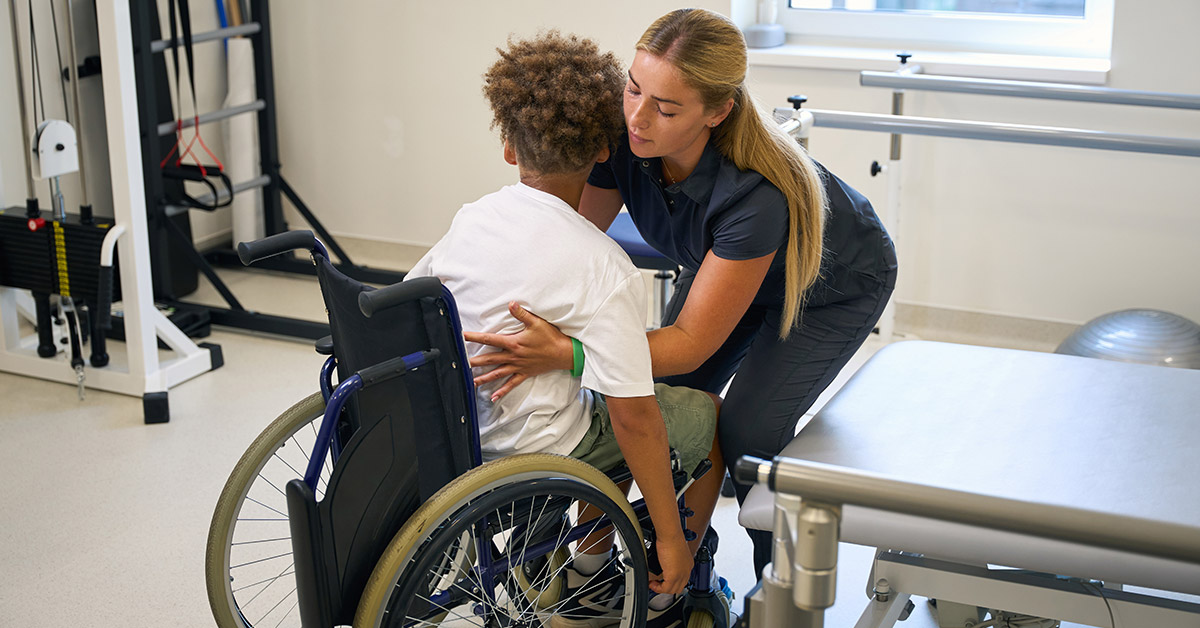
When a child has a preexisting disability, parents often take extra precautions to protect their safety. They may carefully select playgrounds, communicate with schools about mobility needs, or rely on specialized equipment to help their child participate in everyday activities. But even with those precautions, a serious accident can happen.
A child may suffer a broken leg when playground equipment fails, sustain a spinal injury in a car accident, or experience permanent mobility limitations after a dangerous fall.
When the child already has a medical condition or disability, the consequences may be far more serious than they would be for another child.
Parents may then face an unexpected question: Does the child’s preexisting disability affect the family’s right to pursue compensation?
A child injury involving a preexisting condition can still support a personal injury lawsuit in Massachusetts. Having a disability does not eliminate a child’s legal rights or excuse another party’s negligence.
However, these cases require careful investigation. The family must establish what caused the accident, whether another party was legally responsible, and how the incident affected the child’s health and daily life.
For families in Boston, Massachusetts, and the surrounding New England states, understanding these distinctions is an important first step toward protecting an injured child’s future.
Can You Sue if Your Child Already Had a Disability Before the Accident?
Yes. A preexisting disability does not automatically prevent a child from bringing a personal injury claim.
Massachusetts law generally allows an injured person to seek compensation when another party’s negligence causes a new injury or makes an existing condition worse.
The central issue is not whether the child was completely healthy before the accident. It is whether another party’s legally actionable conduct caused additional harm.
Consider a child with a mobility-related disability who is injured when an improperly secured piece of playground equipment collapses.
The child may already need assistance with walking, transferring between surfaces, or performing certain activities. But if the equipment failure causes a fractured leg, the preexisting disability does not erase the new injury.
The family may have a claim if the evidence establishes that a responsible party failed to meet an applicable legal duty and that failure caused the accident.
The same principle can apply when an accident worsens an existing medical condition.
However, the child cannot recover damages for limitations that existed independently of the accident and were not worsened by it.
Distinguishing between the original condition and the additional harm is an important part of evaluating the case.
What Is the Eggshell Plaintiff Rule in Massachusetts?
One of the most important legal principles in cases involving preexisting conditions is commonly called the eggshell plaintiff rule.
The principle recognizes that a negligent party generally cannot avoid responsibility simply because the injured person was more vulnerable to harm than someone else.
In other words, a defendant may be responsible for the consequences of an injury even when the injured person’s existing condition made those consequences more severe.
Massachusetts law recognizes this principle.
The Massachusetts model civil jury instructions on causation explain that a defendant’s conduct may create liability when it combines with a preexisting condition to produce greater harm than the accident would otherwise have caused.
The Massachusetts Model Civil Jury Instructions on Causation explain how a preexisting condition can affect the extent of injuries for which a negligent party may be held responsible.
The instructions also distinguish harm caused by the incident from changes that would have occurred independently.
For example, imagine two children experience a similar fall because of a negligently maintained structure.
One child suffers a minor fracture and recovers.
The other child has a preexisting medical condition that makes the same type of injury more complicated, requiring extensive treatment and a longer recovery.
The second child’s vulnerability does not automatically limit the responsible party’s liability to the injuries a child without that condition might have suffered.
But the family still must prove the accident caused the claimed harm.
This distinction can be especially important when a child has a complex medical history.
How Can an Accident Affect a Child With a Preexisting Disability?
A serious accident may affect a child with a disability in several ways.
The child may suffer an entirely new injury unrelated to the existing condition.
A child who already uses a wheelchair, for example, can still suffer a broken arm, serious burn, or traumatic injury caused by another party’s negligence.
The accident may also aggravate the original condition.
A child with limited mobility may lose additional strength or function after a fall. A child who previously needed assistance with certain activities may require substantially more support after the injury.
Some children experience complications that affect rehabilitation, independence, or the ability to participate in school and family activities.
The consequences depend on the child’s diagnosis, the nature of the accident, and the medical evidence.
It is important not to assume that every change in the child’s condition resulted from the accident.
Medical professionals may need to determine which symptoms or limitations were present before the incident, which developed afterward, and whether the accident caused or contributed to those changes.
The legal claim should reflect the child’s actual additional harm, supported by evidence.
Who May Be Responsible When a Child With a Disability Is Injured?
Liability depends on how the accident occurred.
A preexisting disability does not establish negligence, but it also does not protect a responsible party from liability.
If a child is injured by unsafe playground equipment, the investigation may involve the property owner, maintenance contractor, equipment installer, or manufacturer.
If the injury occurs at school or daycare, investigators may examine supervision, equipment maintenance, and the safety measures required under the circumstances.
A negligent driver may be responsible for injuries caused in a motor vehicle collision.
A manufacturer or seller may face a product liability claim if a defective product caused the accident.
Some incidents involve more than one potentially responsible party.
For example, a child may be injured when a wheelchair-accessible playground feature breaks during ordinary use. Investigators may need to determine whether the equipment was defective, improperly installed, inadequately maintained, or used in a manner that contributed to the failure.
The fact that the equipment was designed for children with disabilities does not automatically establish that it was defective or unsafe.
Evidence of the particular failure and the applicable legal standards is essential.
Swartz & Swartz, P.C. represents families in serious child injury cases in Boston and Massachusetts, including matters involving unsafe equipment, negligence, and defective products.
What if the Child Was Injured on a Public Playground?
Public playground injuries raise additional legal questions, especially when the child has mobility limitations or other support needs.
An accident may involve a broken slide, an unstable platform, an unsafe transfer point, or equipment that was not properly assembled or maintained.
The investigation should focus on the condition of the equipment and the circumstances of the accident.
A parent may reasonably suspect negligence when a piece of equipment breaks or becomes unstable. But the cause must still be established.
Relevant evidence may include maintenance records, installation instructions, prior complaints, inspection reports, photographs, and expert examination of the equipment.
If a city or town owns or operates the playground, Massachusetts governmental liability rules may affect the claim.
Claims under the Massachusetts Tort Claims Act generally involve special written presentment requirements, including a two-year presentment period, and may be subject to immunity provisions and damages limitations.
Other statutes or legal theories may also affect the case.
The correct procedure depends on the responsible entity and the nature of the alleged wrongdoing.
Families should seek legal advice promptly rather than assume that the ordinary deadline for a child’s injury lawsuit applies to every aspect of a public playground claim.
Some children experience complications that affect rehabilitation, independence, or the ability to participate in school and family activities.
Can a School or Daycare Be Liable for Injuring a Child With Special Needs?
Schools and daycare providers may have responsibilities relating to supervision, equipment safety, and the protection of children in their care.
Those responsibilities must be evaluated in light of the circumstances.
A child who needs physical assistance may require particular safety precautions during transfers, playground activities, transportation, or other supervised tasks.
If staff members know about an important safety need, that knowledge may be relevant when determining what reasonable care required.
For example, suppose a child who requires assistance using playground equipment is injured after staff disregard a known safety procedure.
An investigation may examine whether the procedure was necessary, whether staff understood the risk, and whether the failure contributed to the injury.
But a child’s disability does not make a school or daycare automatically responsible for every accident.
A legal claim requires proof of a duty, a breach of that duty, causation, and legally recognized damages.
Public schools may also be subject to governmental immunity and procedural rules that differ from those applicable to private facilities.
For more information, read our guide to whether you need a lawyer if your child was injured at school.
How Do You Prove an Accident Made a Preexisting Condition Worse?
Proving additional harm can be one of the most challenging parts of a child injury case involving a preexisting condition.
The medical evidence must help explain the child’s condition before the accident and how it changed afterward.
A child may already have years of treatment records, specialist evaluations, therapy notes, and educational assessments.
Those records can provide a valuable baseline.
For example, a child who previously could walk short distances with assistance may lose that ability after a serious accident.
Medical records, rehabilitation assessments, and testimony from treating professionals may help establish whether the loss of function resulted from the injury.
A family may also document changes in the child’s daily routine.
The child may require additional help with dressing, bathing, transferring, or participating in school activities.
New pain, increased treatment needs, or a decline in previously established abilities may be relevant.
However, a change that occurred after an accident is not automatically proof that the accident caused it.
Medical experts may need to distinguish the effects of the injury from the expected progression of the original condition.
This is why the child’s medical history is important rather than something the family should try to minimize or conceal.
Accurate records help explain what the accident changed.
Can Insurance Companies Blame the Injury on the Child’s Disability?
An insurance company may question whether the accident caused the child’s current limitations or whether those limitations existed beforehand.
That is a legitimate issue to investigate when evaluating causation and damages.
However, the existence of a disability does not automatically defeat the claim.
An insurer cannot fairly treat every post-accident medical problem as unrelated simply because the child had prior health challenges.
The evidence must address the actual cause of the harm.
Suppose a child had limited mobility before an accident but could independently perform certain daily activities.
After a serious fracture, the child loses some of those abilities and requires additional assistance.
The question is whether the accident caused the decline, whether the decline is temporary or permanent, and what treatment or support is reasonably necessary.
The family’s attorney may work with medical specialists to explain those changes.
An insurer may also examine whether some future care would have been required even without the accident.
A careful damages evaluation separates the child’s existing needs from new or increased needs caused by the injury.
The goal is not to disregard the preexisting condition. It is to account for it accurately while holding a negligent party responsible for the harm the incident caused.
What Compensation Can Be Available for a Child With a Preexisting Disability?
Compensation in a serious child injury case depends on liability, causation, and the losses that can be legally attributed to the accident.
Recoverable damages may include medical treatment for a new injury or aggravation of an existing condition.
They may also include additional rehabilitation, therapy, assistive equipment, and other care made necessary by the incident.
If the child requires increased personal assistance, modifications to the home, or additional transportation support because of the injury, those costs may be relevant.
Pain and suffering, loss of function, and reduced enjoyment of life may also form part of a claim.
When the injury creates permanent limitations, attorneys may need to evaluate future medical expenses and the child’s potential earning capacity.
The distinction between existing and additional needs is critical.
For example, a child who already required a wheelchair before an accident generally cannot claim the original need for that wheelchair as a new injury.
But if the accident creates a need for additional equipment, medical treatment, or increased care, those new expenses may be recoverable when supported by the evidence.
In catastrophic cases, a life-care planner may help estimate the cost of treatment and assistance over the child’s lifetime.
Swartz & Swartz also handles catastrophic injury claims involving permanent disabilities and long-term care needs.
Why the Child’s Life Before the Accident Matters
In cases involving preexisting disabilities, the child’s life before the accident provides essential context.
Medical diagnoses alone do not tell the complete story.
Two children with the same diagnosis may have different levels of independence, mobility, communication, and support needs.
One child may attend school with limited assistance, participate in adaptive recreation, and perform many daily activities independently.
Another may require extensive support throughout the day.
An injury may affect each child differently.
A serious fracture might temporarily limit one child’s mobility while causing a much longer loss of function for another.
That difference matters when evaluating the consequences of the accident.
Families can help document the child’s pre-accident abilities through medical records, therapy notes, school assessments, photographs, videos, and statements from people familiar with the child’s routine.
The goal is to establish a reliable picture of what the child could do before the injury and what changed afterward.
This evidence may be particularly important when the child cannot fully explain their symptoms or limitations.
What if the Accident Causes Permanent Loss of Independence?
For some children with preexisting disabilities, a serious injury may cause a permanent change in the level of assistance they need.
A child who previously could transfer independently may require help after an accident.
A child who could walk with support may become dependent on a wheelchair for more activities.
An injury may also increase pain, complicate rehabilitation, or reduce the child’s ability to participate in school and community life.
These changes can affect the entire family.
Parents may need to provide additional care, arrange transportation, modify their homes, or coordinate more frequent medical appointments.
Some changes may be temporary.
Others may continue into adulthood.
When permanent limitations are alleged, medical specialists may need to evaluate the child’s long-term prognosis and explain which limitations are attributable to the accident.
A careful claim should account for the child’s future needs without assuming that every possible complication will occur.
The objective is to seek compensation supported by medical evidence and a reasonable assessment of the child’s likely future.
Should Parents Accept an Early Settlement Offer?
Parents should be cautious about accepting a final settlement before the child’s additional injuries and long-term needs are understood.
A child with a preexisting disability may have a complicated recovery.
Doctors may need time to determine whether the child will return to their previous level of function.
Rehabilitation may reveal limitations that were not obvious immediately after the accident.
An early settlement may not fully account for additional therapy, equipment, medical procedures, or ongoing care.
A settlement release may also prevent future claims arising from the same incident.
The terms should therefore be reviewed carefully.
Settlements involving minors may require court involvement or approval under applicable Massachusetts procedures.
Before agreeing to resolve a serious claim, parents should understand the child’s prognosis, the available medical evidence, and how the settlement would protect the child’s interests.
How Long Do You Have to File a Child Injury Claim in Massachusetts?
Massachusetts generally provides a three-year statute of limitations for personal injury claims under Massachusetts General Laws Chapter 260, Section 2A.
Special tolling rules may apply when the injured person is a minor under Chapter 260, Section 7.
However, parents should not assume that every claim involving a child can wait until adulthood.
Claims involving public entities, medical malpractice, or other special circumstances may have different deadlines and requirements.
For example, a claim governed by the Massachusetts Tort Claims Act may require written presentment to the appropriate public official within two years.
Other legal restrictions may affect whether a claim can proceed.
Parents should speak with an attorney promptly to identify the correct deadlines.
Waiting can also make the case harder to investigate.
Playground equipment may be repaired or replaced. Surveillance footage may be deleted. Witnesses may become difficult to locate.
Medical records and early rehabilitation assessments are often especially important when the child had a preexisting condition.
What Should Parents Do After a Serious Injury?
The first priority is obtaining appropriate medical care.
Make sure treating professionals understand the child’s medical history, existing disabilities, medications, and usual level of function.
That information can help clinicians evaluate the injury and plan treatment.
After the immediate medical needs are addressed, preserve information about the accident.
Photographs of the location, damaged equipment, or other relevant conditions may be useful.
Keep copies of incident reports, medical records, therapy evaluations, and communications with the organization involved.
If equipment may have caused the injury, preserve it when possible and avoid altering it.
Parents may also find it helpful to document changes in the child’s daily abilities, treatment needs, pain, and independence.
Do not exaggerate or minimize the child’s condition.
Accurate records are more valuable than assumptions about what the accident may have caused.
If negligence or a defective product may be involved, an attorney can help determine what additional evidence should be preserved and whether expert investigation is needed.
Frequently Asked Questions About Child Injuries and Preexisting Conditions
Can I sue if my child already had a disability before the accident?
Yes, potentially. A preexisting disability does not automatically prevent a personal injury claim. You must still establish that another party’s legally actionable conduct caused a new injury or aggravated an existing condition.
What is the eggshell plaintiff rule in Massachusetts?
The eggshell plaintiff rule generally means that a negligent party may be responsible for injury consequences made more severe by the injured person’s preexisting vulnerability. The claimant must still establish liability and causation.
Can a child receive compensation if the accident made an existing condition worse?
Yes. When supported by evidence, compensation may be available for additional medical treatment, pain, loss of function, increased care needs, and other legally recoverable harm caused by the accident.
Can a school or playground operator be liable for injuring a child with special needs?
Possibly. Liability depends on the applicable duty of care, the circumstances of the accident, and whether negligence or a legally actionable defect caused the injury. Public entities may have additional legal protections and procedural requirements.
How can parents prove their child’s condition changed after the accident?
Medical records, therapy assessments, school records, photographs, videos, and expert opinions may help document the child’s abilities before the accident and the changes caused by the injury.
Does a child’s preexisting disability reduce the value of an injury claim?
Not automatically. A preexisting disability does not eliminate the right to recover for additional harm caused by negligence. However, damages must be supported by evidence and distinguish the accident’s effects from unrelated preexisting limitations.
Protecting the Rights of Children With Preexisting Disabilities
When a child with a disability suffers a serious injury, the consequences can extend far beyond the immediate medical treatment.
An accident may create new physical limitations, increase the need for assistance, or change abilities that the child and family worked for years to develop.
The existence of a preexisting condition does not make those losses less important.
Massachusetts law recognizes that a negligent party may be responsible for harm that is made more severe by an injured person’s existing vulnerability.
But determining responsibility requires careful investigation, reliable medical evidence, and a clear understanding of how the accident changed the child’s life.
At Swartz & Swartz, P.C., we represent children and families pursuing serious personal injury and product liability claims in Boston, Massachusetts, and the surrounding New England states.
Our attorneys understand that childhood injuries require an evaluation of both immediate harm and long-term consequences.
If your child has a preexisting disability and suffered a serious injury because of suspected negligence or a defective product, we can review the circumstances and discuss whether a legal claim may be available.
Call Swartz & Swartz, P.C. at (617) 742-1900 or contact our Boston office to request a consultation.
A child’s medical history should never be used as a reason to overlook preventable harm. When negligence causes a new injury or makes an existing condition worse, families deserve a careful evaluation of their legal rights.
Need Help?
If you or someone you know, needs help from a lawyer, contact the law offices of Swartz & Swartz, use our live chat, or send us a message using the form below and we’ll get in touch to assess your case and how we can help.
About the Author: James Swartz

Keep Reading
Want more? Here are some other blog posts you might be interested in.


When a child has a preexisting disability, parents often take extra precautions to protect their safety. They may carefully select
A child spinal cord injury can change a family's life in seconds. A serious fall from unsafe playground equipment, a
A patient arrives at an emergency department with a high fever, rapid heartbeat, weakness, and worsening confusion. The symptoms may